
Improvement is not an accident. It is a strictly scheduled event. You do not accidentally get better at a complex skill. You engineer the improvement through ruthless systems. I manage a complex network of digital publishing platforms. I run domains like blogthecurious.com and thebrightlance.com. I track live server metrics. I map out intricate internal link architectures. I draft highly technical privacy policies. I know from daily experience that websites do not grow by accident. They grow through constant, relentless audits. I apply this exact same clinical approach to my language learning. You must audit your brain the same way you audit a web server. If you leave your learning to chance, you will stagnate immediately. Here is exactly what I do to keep improving every single week.
The Sunday Data Audit
Every Sunday evening, I execute a strict review protocol. I open my spaced repetition flashcard database. I do not guess how my week went. I do not rely on my feelings. Feelings fluctuate based on sleep quality and stress. I look at the cold numbers. I check my memory retention rates. I look for the leeches. A leech is a specific digital card that I fail constantly. It clogs the system. It drains my cognitive energy. I completely delete these cards. I rebuild them from scratch with better context. I realized very early that The Weekly Study Plan That Finally Made Things Click for Me required absolute honesty about the raw data. You cannot improve if you lie to yourself about your weaknesses.

Sourcing Wild Statistical Data
You stop improving the exact moment you get bored. Generic language curriculums teach you how to ask for directions to a public library. They teach you the names of common farm animals. My brain actively deletes this useless information. To keep improving every week, I constantly feed my system highly specific data. I follow professional basketball. I analyze first action NBA playoff statistics. I calculate point spreads, rebounding probabilities, and assist ratios for specific point guards. I translate these highly technical statistical concepts into my target language. I find foreign language sports blogs. I read articles analyzing the exact same NBA playoff games. My brain actively wants to know the foreign term for a fast break turnover. The intense curiosity forces the improvement.
Visual Anchors and Extreme Precision
Reading text on a digital screen is a slow way to learn. Translating foreign words into English text adds a massive mental bottleneck. It forces your brain to take the slow path. I study digital photography. I focus heavily on retro aesthetics using a Canon IXUS and 35mm film lenses. I spend hours editing studio style portraits on my computer. I apply this exact visual precision to my language learning. I refuse to use English translations on my digital flashcards. I replace the text with my own high resolution photography. When I edit stylized character transformations to use as visual prompts for human anatomy vocabulary, I am absolutely meticulous. I must ensure specific human anatomical traits are accurately maintained. I must keep human traits perfectly accurate. I preserve the exact human facial geometry in my image edits. If an edit distorts the face, the brain rejects the visual anchor. My brain connects the foreign sound directly to the physical reality in the precise image. Updating these visual anchors every week keeps my memory razor sharp.
The Unbreakable Physical Anchor
You cannot bolt a high speed habit to empty space. You must attach the behavior to a permanent physical ritual. This concept is called anchoring. I am incredibly meticulous about my morning coffee. It is the one physical ritual I never skip. Every single morning, I walk into the kitchen and execute a precise series of steps. I brew Ethiopian Guji beans. I place a glass decanter on my digital scale. I weigh exactly eighteen grams of coffee. I grind the beans to a medium coarse texture. I use a strict V60 pour over method. I monitor the exact water temperature with a gooseneck kettle. The bloom phase takes exactly forty five seconds. If my language progress stalls, I look at my coffee routine. Did I rush the pour? Did I skip the scale? When I tighten the physical precision of the coffee brewing, I automatically tighten the mental discipline of my study session.
Engineering the Digital Lockdown
Your smartphone steals your time. It is packed with bright red notification badges and addictive social media feeds. You cannot improve if your brain is constantly distracted by digital noise. I rely heavily on mobile task automation in my professional life. I write complex scripts to manage apps.fly2kart.com. I apply this exact same logic to my daily study habit. I use the native shortcuts application on my smartphone to build a strict digital trigger. At exactly seven o’clock every morning, my phone enters a customized focus mode. It silences all incoming emails. It mutes all text messages. It automatically launches my primary spaced repetition flashcard application. By completely removing the friction of choice, I save massive amounts of mental energy. To keep improving, I constantly audit these automation scripts to block new distractions.
The Grayscale Shift
The colors on your screen are designed to hijack your attention. Application developers use neon icons to trigger constant neurological responses. This visual noise slows down your learning speed and exhausts your eyes. I built a massive visual wall between my professional work and my language learning. I go into the accessibility settings on my operating system. I turn on the grayscale color filter. The entire monitor instantly turns completely grey. The bright blue application logos disappear. The red notification dots turn into dull grey circles. The screen suddenly looks like dead industrial machinery. It stops being a slot machine. You only use a completely grey screen to accomplish strict tasks. It calms your nervous system instantly.

The Monolingual Dictionary Rule
Using a bilingual dictionary makes learning feel faster in the short term. It actually ruins your speed in the long term. You look up a word, read the English definition, and instantly forget it. You end up looking up the same word ten times over the next month. I deleted the English dictionary entirely. I downloaded a strict monolingual dictionary. When I find a foreign word I do not understand, I read the definition in that exact same foreign language. I use simpler foreign words to decode the complex word. This requires intense cognitive effort upfront. The struggle is the entire point. I figured out that How I Improved My Pronunciation Without Feeling Embarrassed was deeply connected to this monolingual immersion. You must force the brain to survive entirely inside the target language without English safety nets.
Forcing Active Output
Passive consumption destroys your efficiency. If you try to read a textbook when you are exhausted, your brain will naturally drift away. You will read an entire page and realize you absorbed absolutely nothing. Speed requires active output. You must force the brain to generate original information. I structure my study sessions to be highly interactive. I open a completely blank digital document every evening. I force my thumbs to physically type out complex grammar structures. I write a five sentence journal entry about the privacy policies I drafted that morning for coffeenerdlab.com. When you are physically producing the language, your brain cannot wander. You learn the rules ten times faster because you are actively using them to describe your immediate reality.
The Audio Shadowing Drill
Listening comprehension takes years if you rely on slow, robotic audio. Real humans speak incredibly fast. They slur their words together into a muddy stream of noise. I accelerate my listening skills using a technique called shadowing during my daily commute. I use my dedicated podcast application. I find unscripted native sports podcasts discussing basketball analytics. I find a two minute clip of a native speaker. I pull the speed slider down to exactly seventy five percent. I play the audio and I speak aloud at the exact same time. I overlap my voice perfectly with their voice. I mimic their exact pitch and rhythm. I repeat this brutal process ten times in a row. It shocks the nervous system. This is exactly The Way I Practice Speaking When I’m Alone because it forces my jaw muscles to map the correct physical movements instantly.
Reclaiming the Dead Time
A busy professional life is completely full of hidden wasted minutes. You wait in line at the grocery store for five minutes. You wait for a website server to compile for three minutes. You sit in traffic. I call this dead time. Most people pull out their phones and scroll through social media during these gaps. I completely reclaimed my dead time. Because my home screen is perfectly organized, my raw flashcard application is always exactly one tap away. When I have two free minutes waiting for a server update, I complete ten rapid vocabulary reviews. I string dozens of these tiny micro sessions together throughout the entire day. By the time I go to sleep, I have completed a full hour of intense study without ever scheduling a formal session.
Eliminating the Comfort Zone
The brain loves the comfort zone. Once a routine becomes easy, the brain stops building new neural pathways. It shifts into maintenance mode. You stop improving. You just spin your wheels. I actively hunt for friction. When my fifteen minute reading block feels easy, I immediately increase the difficulty. I switch to a more complex sports blog. I find a denser technical article about website hosting. I constantly push the weight up. If my head does not hurt slightly at the end of the session, the session was a failure. You have to actively pursue cognitive strain to force adaptation.
The Two Minute Minimum Contract
Some mornings are brutal. I might be exhausted from a late night server migration. On those mornings, even a ten minute study session feels like a massive mountain. Your tired brain perceives this mountain as a threat. To survive these low energy days and keep the chain alive, I created a strict contract with myself. The minimum daily requirement is exactly two minutes. I tell myself I only need to review five digital vocabulary cards. The barrier to entry is so incredibly low that my exhausted brain stops resisting the task. Once you actually start the task, the mental resistance completely evaporates. Ninety five percent of the time, I finish my five cards and decide to keep going for another ten minutes.
The Policy of Immediate Forgiveness
You will eventually miss a day. A crisis will happen at work. You will get sick. You will completely forget. This is a biological inevitability of adult life. Most people let a single missed day ruin their entire month. They feel guilty. They feel like their perfect streak is broken. They quit entirely. The guilt causes massive emotional burnout. A missed day is just a missed day. It means absolutely nothing. Do not try to compensate. Do not try to study for double the time the next day. Just get back on the normal schedule immediately. Forgive yourself instantly. Consistency is not about never breaking the chain. It is about how fast you repair the chain after it snaps.

The Nightly Reset Protocol
Your learning speed tomorrow morning is entirely determined by your physical actions tonight. If you leave your desk covered in papers and your phone cluttered with open browser tabs, you will wake up to immediate stress. Your morning routine will fail before you even start the coffee maker. I built a strict nightly reset protocol. Before I go to sleep, I manually close every single open application on my device. I clear the entire digital cache. I plug the phone into a charger located completely outside of my bedroom. I wipe my physical desk completely clean. I leave only my blank notepad and my single black pen on the surface. When I wake up, the environment is completely sterile. It is primed for immediate focus. I have removed the possibility of friction before the day even begins.
The Final Execution Strategy
Improving every single week is not a magic trick. It is simply the result of ruthless environmental engineering. You cannot muscle your way through a complex language using inefficient tools while managing a demanding adult schedule. You must drop the heavy boulder. Stop trying to force your brain to read boring grammar lists for two hours every night. Turn off the English translations completely. Use your own precise photography to anchor the words. Bolt the learning habit directly to your morning coffee ritual. Source wild statistical data about the sports and hobbies you actually care about. Turn your screens grey to kill the digital noise. Harvest your dead time in the grocery store line. When you remove the friction, the language simply flows into the empty space. You stop fighting the current. You let the structured system do the heavy lifting. Build your environment today. Execute the sprints. The improvement will take care of itself.
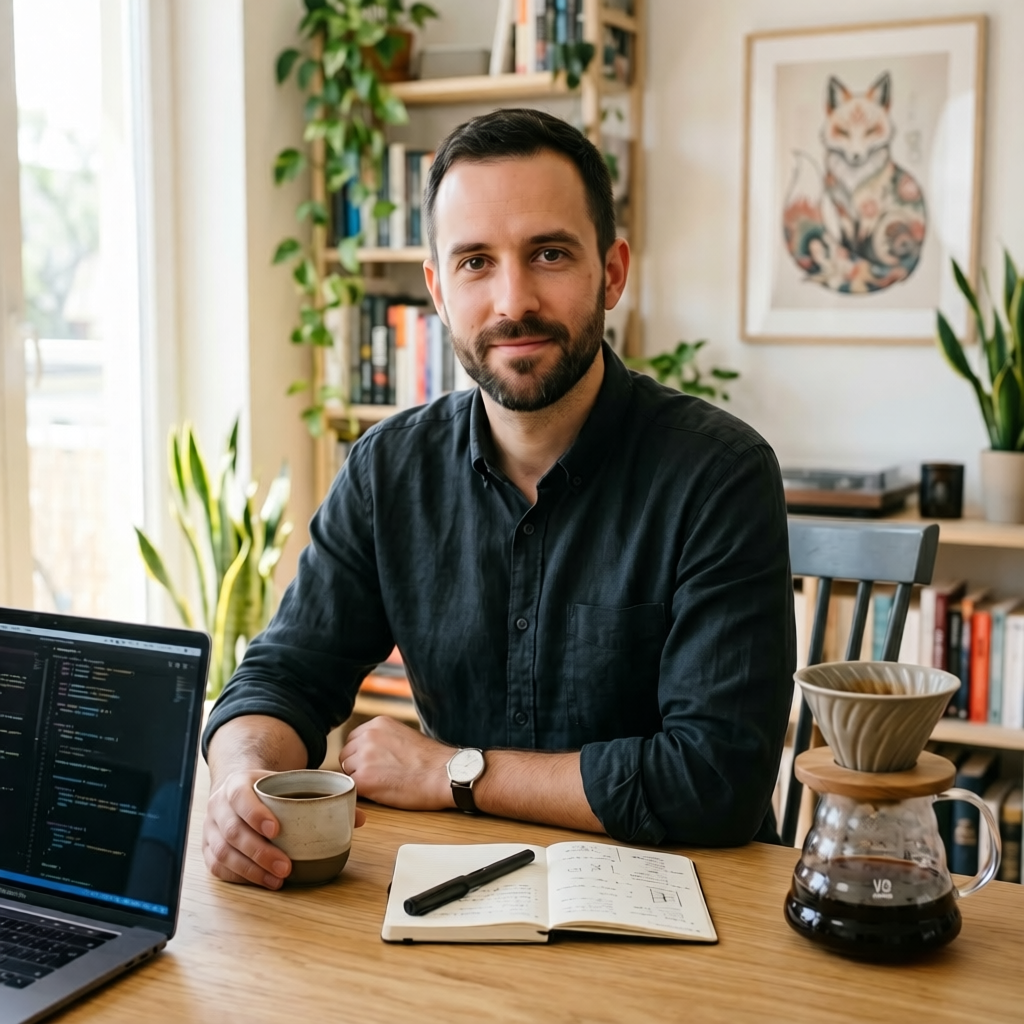
Gabriel Henrique is a language enthusiast and productivity writer. After testing countless study methods, he became obsessed with mastering new languages efficiently. He achieves this without burnout, without endless grammar drills, and without losing focus. At Blog The Curious, he shares everything he has learned along the way.