
I used to believe that complex problems required complex technology. I manage a network of specialized digital publishing websites. I spend my days writing strict privacy policies and building intricate internal link structures. I analyze massive amounts of server traffic data. When I decided to learn a foreign language, I immediately searched for the most advanced software on the market.
I downloaded artificial intelligence tutors. I paid for premium subscriptions to gamified applications. I bought digital courses with interactive video features. My phone was completely packed with heavy, expensive language learning tools.
I made absolutely zero progress. I spent hours tapping colorful buttons, but I could not order a black coffee from a native speaker. I was completely overwhelmed by digital noise.
I realized I had built a massive distraction machine. I deleted every single expensive application. I stripped my study system down to the absolute bare minimum. I replaced the complex software with a few incredibly basic, highly utilitarian tools. My fluency skyrocketed almost overnight. Here are the exact simple tools that completely transformed my progress.
The Raw Flashcard Database
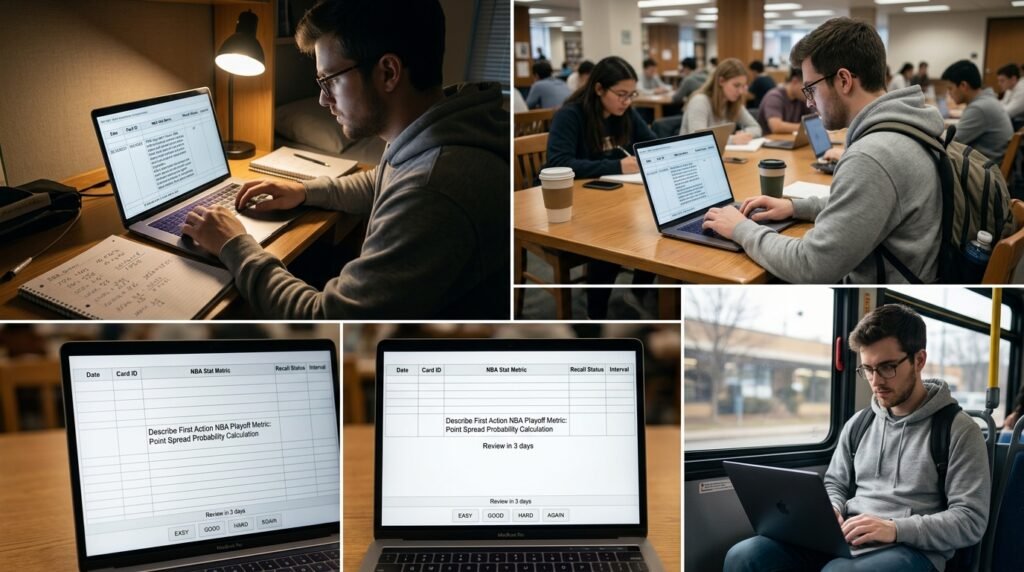
The first tool I kept was a completely blank spaced repetition system.
It has no bright colors. It has no digital gems. It has no competitive leaderboards. It looks exactly like an ugly digital spreadsheet. I discovered The Only App I Still Use After Testing Many Options was not a game at all. It was a raw database.
This tool is powerful because it forces you to do the heavy lifting. The software does not provide a default curriculum. It acts strictly as an empty container. You have to fill the container with your own custom data.
I stopped learning generic words for farm animals and public libraries. I started feeding the database my actual life. I track professional basketball statistics. I calculate first action NBA playoff metrics like point spreads, rebounding probabilities, and assist ratios. I took these highly specific statistical terms and built my own digital flashcards.
I learned the foreign words for probability and forecasting. The tool simply tracked my memory retention curve and showed me the cards at the exact right mathematical interval. The simplicity of the tool forced me to focus entirely on the quality of my own vocabulary.
The Physical Paper Notebook
We are obsessed with digital efficiency. We want to type everything on a sleek glass screen. This is a massive mistake for language learning.
When you type on a smartphone, the software automatically corrects your spelling. It suggests the next word. It does half of the mental work for you. You never actually build the physical muscle memory required to produce the language from scratch.
I bought a cheap, physical paper notebook. I placed it directly on my desk.
Every single evening, I sit down with a black pen. I force myself to write a five sentence paragraph entirely in my target language. I write about the server migrations I handled that afternoon. I write about the specific point guard statistics I analyzed.
Writing by hand is incredibly slow. It is highly frustrating. Your hand physically aches. But that friction is exactly where the learning happens. You cannot hide behind an autocorrect algorithm. You have to recall every single vowel and consonant manually. This analog tool completely exposed my grammatical weaknesses and forced me to fix them permanently.
The Native Audio Speed Controller
Listening to native speakers is terrifying. They speak with brutal velocity. The words crash together into a continuous stream of chaotic noise.
Beginners usually react by listening to slow, artificial audio recorded by robotic voice actors. This is a terrible habit. It completely ruins your ability to understand a real human being.
I needed to hear real humans, but I needed them to speak slower. I downloaded a very simple audio player application. The only feature I cared about was the speed control slider.
I found unscripted, highly conversational podcasts recorded by native speakers discussing digital monetization and website analytics. I loaded the audio files into my simple player. I pulled the speed slider down to exactly seventy five percent.
The tool slowed the native audio down without distorting the pitch. The speaker still sounded completely human, just slightly relaxed. I listened to the slowed audio ten times in a row. I isolated every single slurred syllable. Once my brain mapped the sentence perfectly, I pushed the slider back to one hundred percent. The native speed suddenly felt completely manageable. This one simple slider changed my entire listening comprehension strategy.
The High Resolution Smartphone Camera
Your smartphone possesses an incredibly powerful digital camera. You probably use it to take pictures of your lunch. I use it as my primary vocabulary anchoring tool.
I am deeply interested in digital photography. I focus heavily on preserving precise facial geometry in my edits. I study the retro aesthetics of 35mm film lenses and vintage Canon IXUS flashes.
I absolutely refuse to translate foreign words into English text. Translating creates a massive mental delay. You must link the foreign sound directly to a physical object.
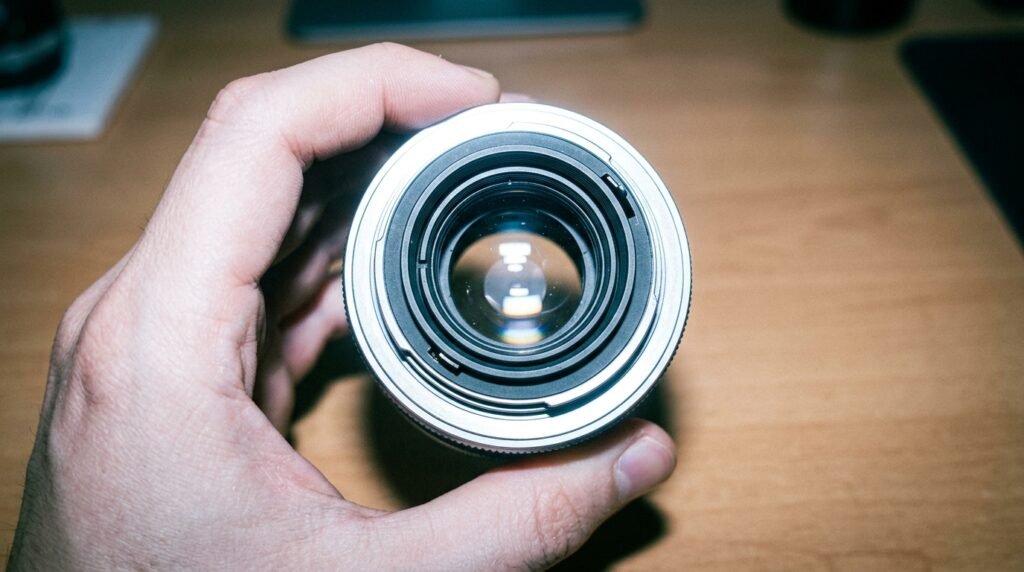
I used my smartphone camera to execute this strategy. When I wanted to learn the foreign word for a camera lens, I did not type the English word into my flashcard application. I took a high resolution macro photograph of my physical 35mm lens. I uploaded that specific photo directly to the digital card.
When the flashcard appeared, I looked strictly at the glass geometry and the metal casing. My brain instantly mapped the foreign sound to the physical reality. This simple camera tool completely eliminated my reliance on the English language.
The Automated Digital Trigger
Willpower is a highly unreliable tool. If you rely on willpower to study every day, you will eventually fail. I manage a heavy workload. By the end of the day, my mental battery is completely empty.
I had to remove willpower entirely from the equation. I turned to my phone’s native task automation software. I built a simple script to control my study schedule.
I am completely obsessive about my morning coffee. I brew Ethiopian Guji beans. I use a strict V60 pour over method. I weigh the coffee precisely on a digital scale. I monitor the exact water flow with a gooseneck kettle. The bloom phase takes exactly forty five seconds.
I built The Routine That Helped Me Go From Zero to Basic Conversations entirely around this physical coffee habit.
I programmed my phone to trigger a specific automation at exactly seven o’clock every morning. The phone silences all notifications. It blocks my email inbox. It automatically opens my flashcard database.
I review my vocabulary while the hot water drains through the paper filter. I never have to make a conscious decision to study. The simple automation script forces the application into my hands at the exact same time every single day.
The Monolingual Dictionary
Translation applications are massive crutches. You highlight a difficult foreign sentence, tap a button, and read the perfect English translation instantly.
Your brain learns absolutely nothing from this interaction. It treats the information as highly disposable data.
I deleted every single translation tool from my computer and my smartphone. I replaced them with one single, highly frustrating tool. I downloaded a strict monolingual dictionary.
When I find a foreign word I do not understand, I am forced to read the definition in that exact same foreign language. I have to use simpler foreign words to decode the complex foreign word.
This process is agonizing at first. A simple reading session takes five times longer. But it forces your brain to stay completely submerged inside the target language. You learn how the language actually defines itself. It completely breaks your psychological dependence on your mother tongue.
The Raw Voice Recorder
We spend massive amounts of time listening to other people speak. We spend almost zero time listening to our own voices.
I thought my pronunciation was excellent. I practiced speaking out loud in my office every day. Then, I finally opened the default voice memo application on my smartphone.
I hit the red record button. I spoke a simple, one minute paragraph about my daily publishing tasks. I hit stop. I played the audio back.
My stomach completely dropped. I sounded terrible. My vowels were entirely flat. My rhythm was completely broken. I sounded like a robotic customer service machine.
The simple voice recorder is a brutal, honest mirror. It provides objective data. You cannot fix a mechanical problem if you refuse to look at it. I started recording myself every single evening. I listened to my own broken audio and compared it directly to native speakers. I treated my voice exactly like I treat a broken piece of website code. I isolated the specific errors and drilled them until they sounded completely natural.
The Grayscale Display Filter
Your phone is a slot machine. The bright red notification badges and the neon green application icons are specifically designed to trigger dopamine spikes in your brain.
When you pick up your phone to study your flashcards, those bright colors immediately distract you. You tap the social media icon instead. Thirty minutes disappear entirely.
I finally found The Tool That Made My Study Routine Easier was simply my phone’s built in accessibility feature.
I opened the settings menu and turned on the grayscale color filter. The entire screen instantly turned into a boring, flat grey box.
The psychological impact is immediate. The phone completely loses its addictive visual power. The social media icons look entirely dead. You only look at the screen when you actually need to accomplish a specific, utilitarian task. This one simple setting switch completely destroyed my digital distraction habit.
The Physical Calendar
Digital tracking applications are highly manipulative. They use arbitrary streaks to keep you addicted. If you miss one day, the application resets your streak to zero and sends you a guilt inducing notification.
This all or nothing mentality destroys long term consistency. A missed day is just a missed day. It is not a complete failure.
I threw away the digital habit trackers. I bought a cheap, large physical paper calendar. I nailed it directly to the wall above my computer monitor.
Every day that I complete my morning flashcard review and my evening writing practice, I take a thick black marker and draw a massive X over the date.
The physical calendar provides highly satisfying, analog feedback. It does not judge me. If I miss a day because a server crashed at work, the calendar just shows a blank square. The next morning, I simply pick up the black marker and draw a new X. The visual chain on the wall provides raw, honest motivation without the toxic psychological manipulation of a digital algorithm.
The Digital RSS Feed
Finding high quality reading material in a foreign language is a massive time sink. You spend twenty minutes searching the internet for a good article. By the time you find one, your study session is already over.
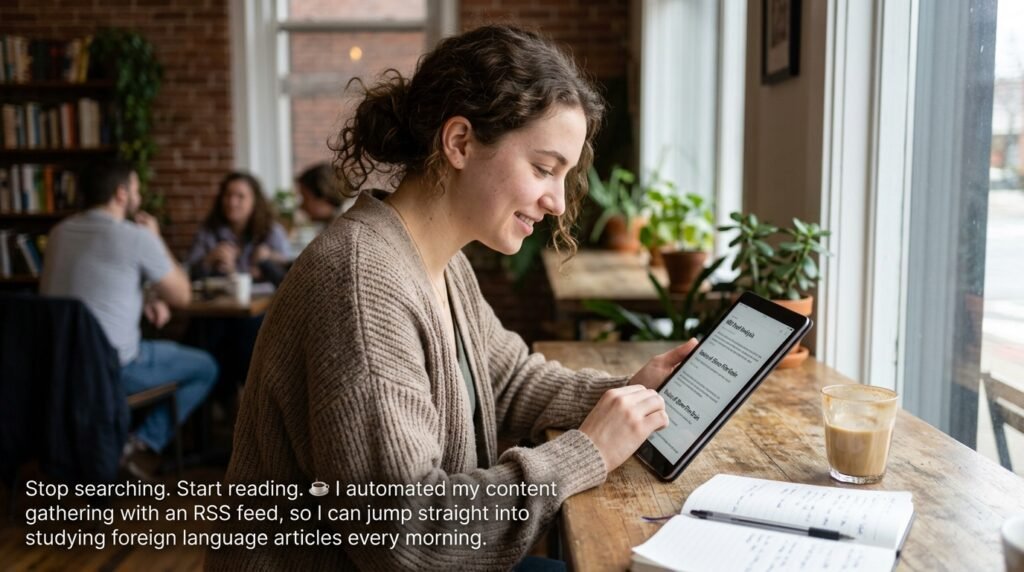
I completely automated my content gathering process. I set up a very simple digital RSS feed.
I found five high quality native blogs. I found a blog discussing NBA player statistics. I found a blog discussing the technical mechanics of 35mm film photography. I found a blog analyzing digital publishing trends.
I plugged these specific website addresses into my RSS reader. Now, the software automatically pulls every new article published on those sites and organizes them into a clean, text only reading list.
I never have to search the internet. The exact content I want to read is automatically delivered to my desktop every single morning. I just open the application, pick an article about basketball, and start reading immediately.
The Ultimate Realization
Fluency is not a software problem. You cannot buy fluency in an app store.
Fluency is a mechanical problem. It requires raw repetition. It requires deep focus. It requires you to struggle with the material until your brain is completely exhausted.
Complex applications are designed to remove that exact struggle. They want to make the process feel incredibly easy and entertaining. That is exactly why they fail.
You must seek out the friction. Delete the multiple choice games. Delete the digital leaderboards. Strip your environment down to the absolute bare essentials.
Get a raw flashcard database. Get a physical paper notebook. Use a simple voice recorder. Turn your phone screen entirely grey. Anchor your habits to your daily physical rituals.
When you stop trying to entertain yourself and start treating your language study like serious heavy machinery, your progress will absolutely explode. The simple tools demand your full attention. Give them your attention today and build the real world fluency you actually deserve.
Gabriel Henrique is a language enthusiast and productivity writer. After testing countless study methods, he became obsessed with mastering new languages efficiently. He achieves this without burnout, without endless grammar drills, and without losing focus. At Blog The Curious, he shares everything he has learned along the way.