
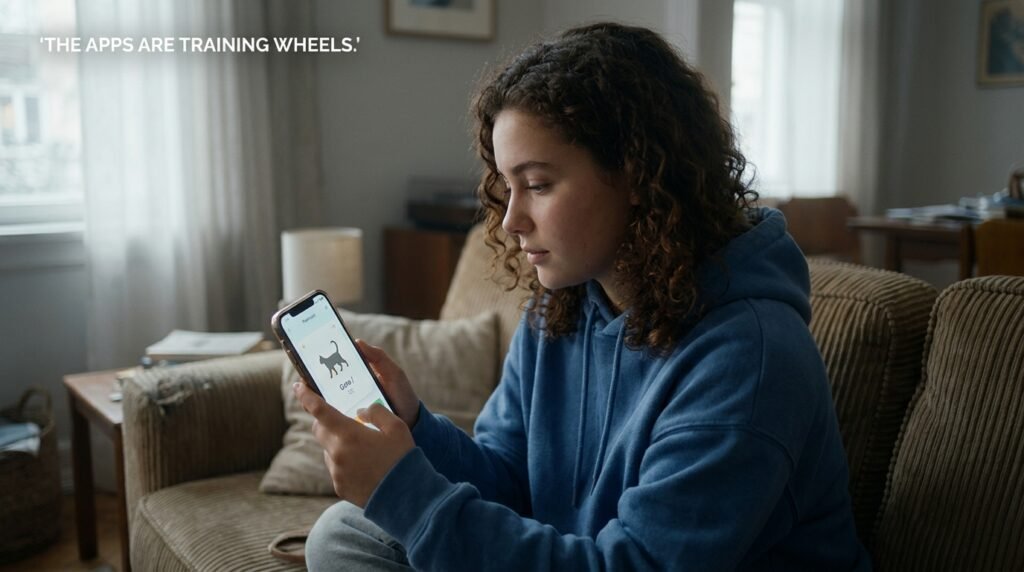
My iPhone used to be a crowded graveyard of language learning icons. I had the green owl. I had the blue parrot. I had orange circles and purple squares. I had everything. At one point, I had an entire folder on my home screen dedicated to these tools. I spent more time checking notifications and maintaining digital streaks than I did actually speaking the language.
I am a digital publisher. I manage complex content networks. I run deep statistical models for NBA playoff betting. I track point spreads and rebound probabilities with obsessive detail. I love data. I love efficiency. I thought that the more technology I threw at my language learning problem, the faster I would reach fluency.
I was wrong. I fell into the trap of digital busywork. I spent six months winning leagues on a popular gamified app. I felt incredibly productive. I was collecting digital gems. I was moving up the leaderboards. But when I actually tried to have a conversation with a native speaker, I realized I was completely illiterate. I knew how to translate sentences about cats eating apples. I had no idea how to explain my job or talk about my morning coffee.
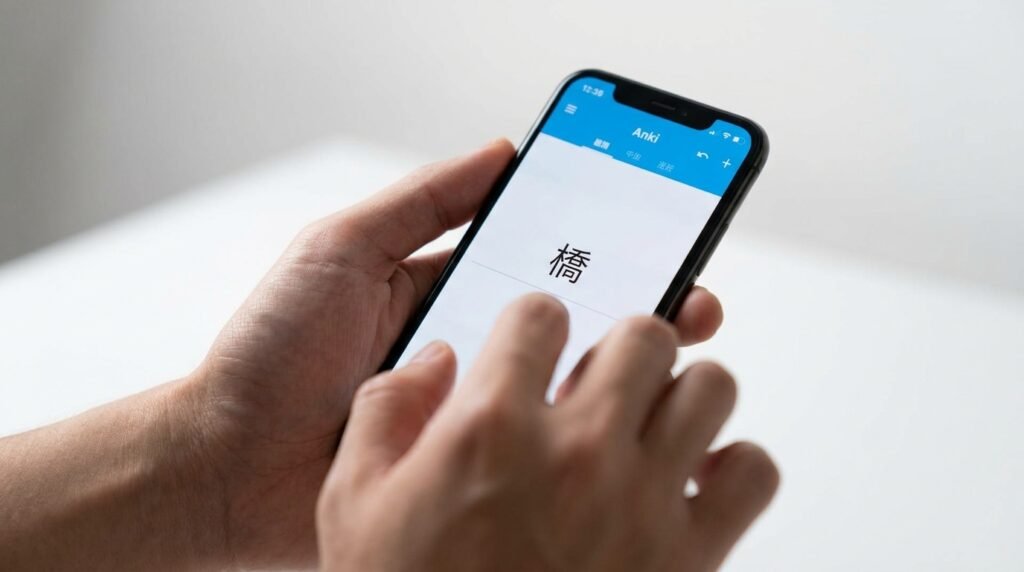
That failure forced me to audit my digital life. I deleted almost everything. I went from fourteen apps down to one. That single survivor is Anki. It is not pretty. It looks like a Windows 95 spreadsheet. It has zero sound effects and no cute mascots. But it is the most powerful weapon in my arsenal. Here is exactly why it is the only app I still use and how I turned it into a high-leverage tool.
The Problem With Gamification
Most language apps are designed to keep you addicted to the interface. They hire the same psychological engineers who design slot machines. They want you to stay on the app for as long as possible. They use bright colors and satisfying sounds to trick your brain into thinking you are making progress.
You can have a 500-day streak and still be unable to survive a basic interaction. I realized I was becoming an expert at the “game” of the app. I was not becoming an expert at the language. I was tapping buttons and dragging tiles. My brain was operating on autopilot.
Real learning requires friction. It requires the uncomfortable sensation of not knowing the answer. When an app makes everything feel like a fun little game, it removes the very struggle that forces your brain to grow. I had to step away from the easy interfaces. I needed a tool that demanded active production. I needed The Vocabulary System That Finally Worked for Me because it focused on long-term retention instead of short-term dopamine hits.
The Logic of Spaced Repetition
Anki is a Spaced Repetition System (SRS). It is built on a very simple mathematical principle. Your brain forgets things at a predictable rate. If you learn a new word today, you will likely forget it tomorrow. But if you review it tomorrow, you might remember it for three days. If you review it again in three days, you might remember it for a week.
Anki tracks this curve for every single piece of information you enter. It shows you the card at the exact moment you are about to forget it.
As a stats guy who tracks NBA playoff metrics, this clicked for me immediately. It is about return on investment. I don’t want to waste time reviewing words I already know perfectly. I only want to spend energy on the words that are slipping away. Anki is the most efficient filter for human memory. It ensures that every second I spend in the app is focused on my highest-priority weaknesses.
My Morning Ritual: Coffee and Cards
I am deeply meticulous about my morning coffee. I use a V60 pour over method. I buy heirloom Ethiopian beans from the Guji region. I weigh exactly 18 grams of beans. I monitor the water temperature with a gooseneck kettle. The entire process is a ritual.
The “bloom” phase of a V60 takes exactly 45 seconds. This is when I do my first set of Anki reviews.
I don’t sit at a desk for an hour to study. I use the “dead time” in my day. I do ten cards while the coffee blooms. I do another twenty cards while the water drains through the filter. By the time I take my first sip of coffee, I have already completed thirty high-leverage reviews.
This is How I Use Repetition Without It Feeling Repetitive because it is integrated into the physical rhythms of my day.
It doesn’t feel like a chore. It feels like a part of the coffee ritual. Because the sessions are so short, I never feel overwhelmed. I never feel the urge to procrastinate. I just do a few cards and move on with my life.
The Power of Customization
The reason Anki survives while other apps die is customization. Most apps provide a pre-made curriculum. They force you to learn their specific list of words. They teach you how to ask for directions to a library or how to buy a ticket to a museum.
I don’t care about libraries or museums. I care about digital publishing, basketball statistics, and specialty coffee.
Anki is a blank slate. I don’t use pre-made decks. I build my own. When I am reading a news article about an NBA trade and I see a word I don’t know, I add it to Anki. When I am drafting a privacy policy for one of my websites and I hit a difficult legal term, I add it to Anki.
I am building a personalized dictionary of my own life. I am only learning words that I actually have a reason to use. This immediate relevance is the secret to retention. Your brain is a survival machine. It discards useless information. When you feed it words that help you do your job or talk about your passions, it locks them in.
Moving From Words to Sentences
A massive mistake beginners make with Anki is creating cards with single words. They have a card with an English word on the front and a foreign word on the back. This is a recipe for failure.
Individual words are fragile. They have no context. They have no personality.
I only use full sentences. I use a technique called “Cloze Deletion.” The app shows me a full sentence with one word missing. I have to guess the missing word based on the context of the entire thought.
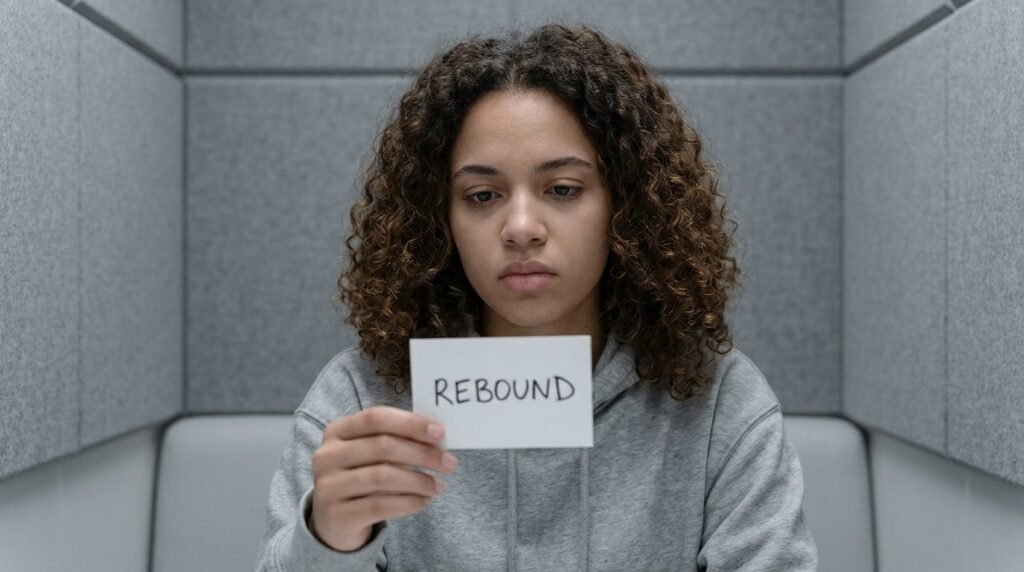
If I want to learn the word for “rebound,” I don’t just put “rebound” on a card. I write: “The center grabbed a crucial [rebound] in the final seconds of the playoff game.”
By learning the sentence, I am learning the grammar, the prepositions, and the word order all at once. I am learning how the word actually behaves in the real world. My brain stops seeing words as isolated data points. It starts seeing them as parts of a story.
The Digital Publisher Advantage
Because I manage websites, I am comfortable with basic HTML and digital formatting. I used this background to turn my Anki cards into a multimedia experience.
I don’t just use text. I use images and audio.
I have a deep interest in digital photography. I focus on high-precision identity likeness and specific camera aesthetics. I take photos of objects in my house—my kettle, my digital scale, my computer monitor—and I put those photos directly on the back of my flashcards.
When I see the card, I am not thinking of an English word. I am looking at a photo of my actual object. I am mapping the foreign sound directly to my physical reality.
I also add audio clips. I use a mobile shortcut to record myself saying the sentence or I pull high-quality audio from native speakers. Hearing the sound while seeing the image creates an unbreakable neurological link. It is The Tool That Made My Study Routine Easier because it engages multiple senses at the same time.
Why Aesthetics Don’t Matter
People often complain that Anki is ugly. They say the interface is confusing. They miss the cute animations and the bright colors of the gamified apps.
I don’t care about aesthetics. I care about results.
A gym with neon lights and a fancy juice bar is useless if you don’t lift the weights. A raw, dusty garage gym with rusted iron plates is a powerhouse if you do the work. Anki is the garage gym of language learning.
The lack of features is actually a feature. There are no distractions. There are no secondary goals. There are no digital gems to collect. There is only you and the information. This minimalist approach forces you to focus. It forces you to engage with the language directly.
Automating the Habit
I am a huge fan of task automation for productivity. I use iOS Shortcuts to manage my blog workflows and my data analysis. I applied this same logic to my Anki habit.
I created a specific automation on my phone. Every time I open my coffee brewing app, my phone automatically checks if I have completed my Anki reviews for the day. If I haven’t, it sends me a subtle notification.
I don’t rely on willpower. I rely on systems. I have tied the language learning habit to a physical trigger that happens every single morning. This removes the “decision fatigue.” I don’t have to decide to study. I just brew my coffee, and the study happens as a natural byproduct of the process.
The App is Only a Vehicle
It is important to remember that Anki is not the teacher. It is just the vehicle. The quality of your results depends entirely on the quality of the fuel you put into it.
If you put boring, generic sentences from a textbook into Anki, you will get bored. You will quit. Your brain will reject the data.
You must feed it real life. You must feed it the things you actually care about.
I use Anki to store the “gold” I find in the real world. When I watch an NBA game in my target language and hear a commentator use a clever idiom, I put it in Anki. When I read a specialty coffee blog and find a specific technical term for processing, I put it in Anki.
The app acts as a storage container for my real-world discoveries. It ensures that I never lose the progress I make during my immersion sessions.
Transitioning to Real Input
The danger of any language app is that you stay in the app forever. You become a professional student. You spend three years on the app and never actually go out into the world.
I use Anki as a bridge. The goal is to spend as little time in the app as possible.
I do my reviews quickly. I don’t linger. I get my data, I lock it in, and then I close the app. I spend the rest of my time on YouTube watching native content or reading articles about digital publishing.
The app is there to give me the “minimum viable vocabulary” so I can survive real content. Once I reach a certain level of comprehension, I actually reduce my Anki use. I shift my energy toward consuming real stories and having real conversations.
Advice for the App-Overloaded
If you are currently overwhelmed by twenty different language icons on your phone, I have a simple challenge for you.
Delete everything except one tool that allows for custom input and SRS mechanics. Give yourself a clean slate. Stop following the generic curriculums that are designed for the masses.
Start building your own deck. Start adding sentences that are related to your actual job, your actual hobbies, and your actual daily life. Use the “dead time” in your day. Tie the habit to something you already do every morning, like brewing a cup of coffee.
Focus on raw efficiency over digital gems. Focus on high-leverage data over cute mascots.
The real world is messy and unscripted. It doesn’t have a leaderboard. It doesn’t give you points for showing up. It only cares if you can understand the message and deliver a response. Anki is the only tool that actually prepared me for that reality. Stop playing games and start building your system today. Your true voice is waiting for you to put down the colorful apps and do the real work.

Gabriel Henrique is a language enthusiast and productivity writer. After testing countless study methods, he became obsessed with mastering new languages efficiently. He achieves this without burnout, without endless grammar drills, and without losing focus. At Blog The Curious, he shares everything he has learned along the way.