
My smartphone used to be a crowded graveyard of colorful icons. I had everything. I had the green owl. I had the blue and red flashcard apps. I had the expensive subscription-based video courses. At one point, I had fourteen different folders dedicated entirely to language learning tools. I spent more time organizing my apps and checking my notifications than I did actually speaking the language.
I am a digital publisher. I manage complex content networks. I run deep statistical models for NBA playoff betting. I track point spreads and rebound probabilities with obsessive detail. I love data. I love systems. Naturally, I thought that the more technology I threw at my language learning problem, the faster I would become fluent.
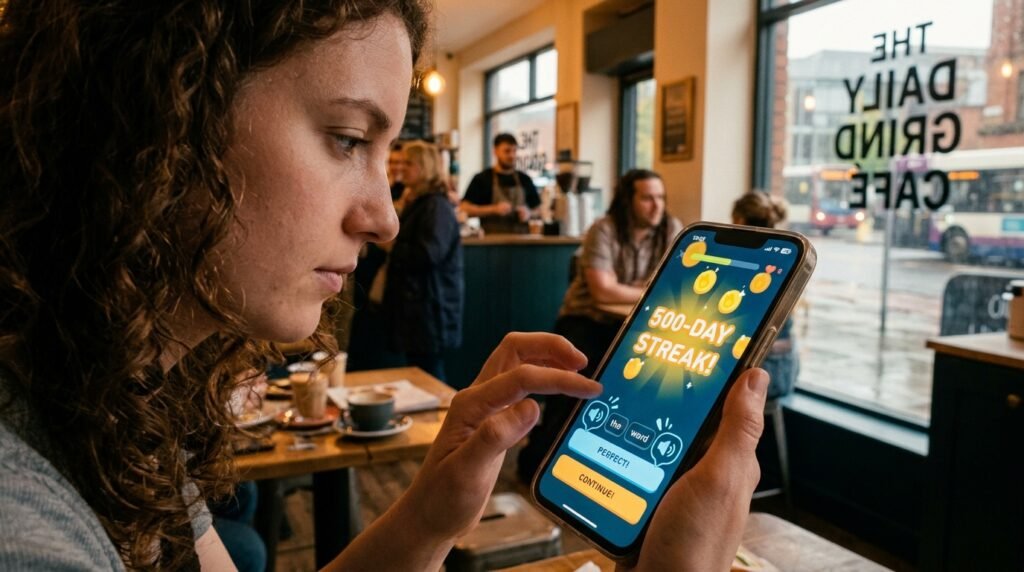
I was wrong. I fell into the “App Trap.” I spent six months maintaining a massive streak on a popular gamified app. I felt incredibly productive. I was winning leagues. I was collecting digital gems. But when I walked into a specialty coffee shop and tried to order a V60 pour over in my target language, I completely froze. I knew how to translate “the boy eats an apple,” but I did not have the physical reflexes to have a real human interaction.
That moment of failure forced me to audit my digital life. I realized that most language apps are designed to keep you addicted to the interface, not to make you fluent in the real world. I went through a brutal process of deletion. I kept only the tools that provided high-leverage results. Here is exactly what I learned from trying dozens of apps and the few that actually moved the needle for me.
The Problem with Gamification
The biggest problem with modern language apps is gamification. These companies hire the same psychological engineers who design slot machines. They want you to stay on the app for as long as possible. They use streaks, leaderboards, and loud sound effects to trick your brain into thinking you are making progress.
You can have a 500-day streak and still be unable to survive a three-minute conversation. I realized I was becoming an expert at the “game” of the app, but I was not becoming an expert at the language. I was tapping buttons and dragging tiles. My brain was operating on autopilot.
Real learning requires friction. It requires effort. It requires the uncomfortable sensation of not knowing the answer. When an app makes everything feel like a fun little game, it removes the very struggle that forces your brain to grow. I had to rethink everything about What Helped Me Stay Consistent Using Language Apps when I realized I was just playing games and not actually building a skill. I stepped away from the easy “drag and drop” interfaces. I had to look for tools that demanded active production.
The Power of Spaced Repetition (SRS)
Once I deleted the “games,” I turned to the data-heavy side of learning. I discovered Spaced Repetition Systems (SRS). The most famous version is Anki. This is not a flashy app. It looks like software from the early nineties. It is raw, grey, and highly technical.
The core idea of SRS is brilliant. The app tracks exactly how well you remember a specific piece of information. If you find a word easy, it shows it to you again in four days. If you find it difficult, it shows it to you in ten minutes. It forces you to review information at the exact moment you are about to forget it.
Because I love statistical modeling, I was hooked. I started creating my own custom decks. I stopped using pre-made lists. I started taking photos of physical objects in my house and making flashcards out of them. I took my background in digital photography and used it to my advantage. I would take a high-resolution photo of my AeroPress or my favorite coffee beans and put the target language word on the back of the digital card.
This made the information personal. It was not just a random word on a screen. It was my actual life. However, I made a massive mistake in the beginning. I was trying to memorize individual words. I had a deck of 3,000 isolated nouns. When I tried to speak, I could not glue them together. I was trying to build a brick wall without any mortar.
Moving Beyond Individual Words
The breakthrough came when I deleted my word decks and started using sentence decks. I stopped caring about what a specific word meant in isolation. I only cared about how it functioned within a phrase.
If I wanted to learn the word for “assist,” I would not just write “assist.” I would write a full sentence about an NBA player. I would write: “The point guard recorded ten assists in the first half of the playoff game.”
By learning the full sentence, I was learning the grammar, the prepositions, and the word order all at once. I was learning “blocks” of language. This is where my progress shifted from linear to exponential. I stopped overthinking the rules because I was memorizing the patterns. This transition is exactly How I Turned My Phone Into a Learning Tool by stripping away the distractions and focusing on raw, contextual data. I let go of the idea that I needed to understand every single grammar chart before I could speak.
Turning My Phone into a Passive Immersion Tool
I am obsessed with mobile software and task automation for productivity. I use iOS Shortcuts to automate almost everything in my professional life. I decided to apply this same level of automation to my language learning.
I created a specific shortcut on my phone. Every morning at 7:00 AM, my phone automatically switches into a “Language Focus” mode. It changes the system language of my phone. It hides my distracting social media apps. It places my SRS app and my podcast player front and center on the home screen.
While I am in the kitchen brewing a V60 coffee, I do not have to think about what to study. The automation handles the decision-making for me. The phone is no longer a source of distraction. It is a dedicated learning tool.
I also stopped using “learning” podcasts and started listening to “native” podcasts. I found a podcast about basketball analytics in my target language. I did not understand ninety percent of it at first. But because I already knew the subject matter deeply, my brain could fill in the gaps. I knew the stats. I knew the players. I could guess the vocabulary based on the context of the game. This is the ultimate hack for listening comprehension. Find a topic you love and find the equivalent in your target language.
The Problem with Translation Apps
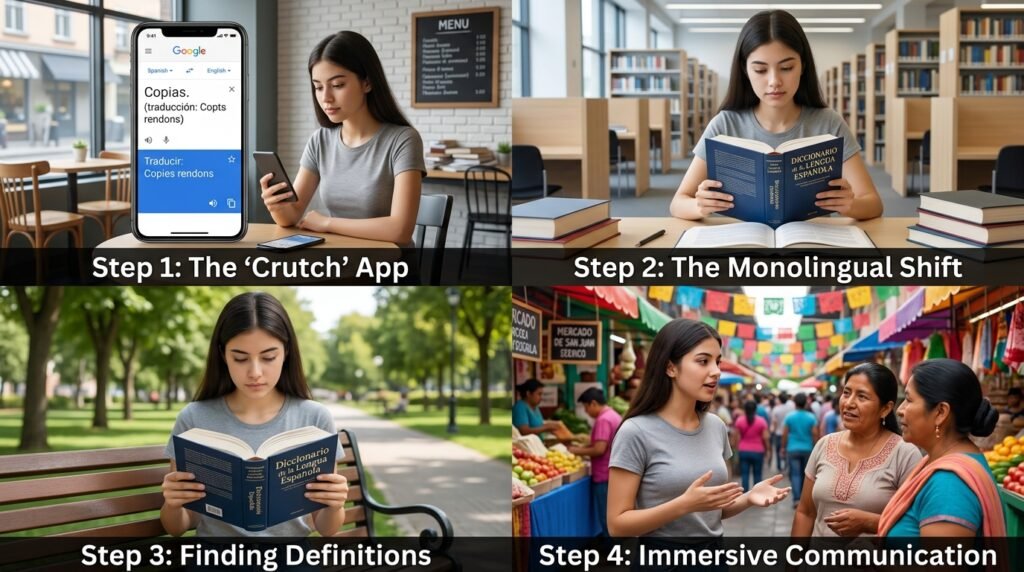
One of the most dangerous tools on your phone is the instant translator. It is a massive crutch. Whenever I hit a difficult sentence, I would copy and paste it into a translator. I would get the answer in one second.
This is the opposite of learning. This is outsourcing your brain to an algorithm. When you get the answer instantly, your brain has no reason to store the information. It treats the data as disposable.
I deleted my translation apps. I replaced them with a monolingual dictionary. If I did not know a word, I had to read the definition in the target language. I had to use words I already knew to explain the words I did not know.
This created a “closed-loop” environment. I was not jumping back and forth between English and my target language. I was staying inside the language for my entire study session. It was frustrating. It was slow. It made my brain feel hot and tired. But that fatigue was proof that I was actually building new neural pathways. The results were shocking, as I detailed in What I Learned After Using Apps Every Day for a Month after thirty days of total immersion and struggling through these “difficult” apps.
Using Voice Notes for Physical Reflexes
Speaking is a physical skill, not just a mental one. You can know all the vocabulary in the world, but if your jaw muscles are not trained to make those specific sounds, you will mumble. I started using the built-in voice memo app on my phone as my primary speaking coach.
Every evening, I would record a two-minute voice note. I would talk about my day. I would talk about the NBA playoff spreads I was analyzing. I would talk about a new coffee roast I tried.
I would then listen to the recording immediately. It was a brutal experience. My accent sounded terrible. My pauses were too long. But the data was objective. I could hear exactly where my tongue was tripping up. I could hear which vowels I was lazy with.
I did not need an expensive tutor to tell me I was making mistakes. The app showed me the truth. I would record the same message again, trying to fix one specific error. This tight feedback loop is how you actually improve your pronunciation. It is about raw, physical repetition.
Customizing Your Digital Environment
I treat my language apps like a digital publisher treats a content management system. I am the architect. I do not follow the default settings.
Most people use an app exactly how the developer intended. They follow the pre-made curriculum. They do the lessons in order. This is a mistake. Your life is not a generic curriculum.
I customized my SRS deck to include my specific professional vocabulary. I added terms related to privacy policies, digital monetization, and statistical forecasting. I made the app a tool for my actual life.
When you learn words that you are actually going to use today, your retention doubles. You have an immediate “use case” for the information. If I learn a word for “rebound” and then I watch a basketball game and hear the commentator use that exact word, that word is locked in forever. The app is just the starting point. The real world is the final exam.
The “Dead Time” Strategy
The most successful app users are not the ones who sit at a desk for three hours. They are the ones who use the “dead time” in their day.
I used my background in productivity management to find these gaps. I have a fifteen-minute commute. I spend ten minutes waiting for water to boil. I spend five minutes in line at the grocery store.
I used mobile automation to make it incredibly easy to start a study session. I do not have to navigate through folders. I just tap a single icon on my home screen and I am immediately inside my flashcards.
By utilizing these tiny five-minute gaps throughout the day, I was able to clock over an hour of study time without ever feeling like I was “studying.” It became a background process in my life. This consistency is the only thing that matters. The system takes the effort out of the habit.
Why Most Language Apps Fail
Most apps fail because they try to be everything to everyone. They try to teach you grammar, vocabulary, culture, and speaking all in one interface. This leads to a “jack of all trades, master of none” situation.
I stopped looking for the “perfect” app. I started looking for “micro-tools.”
I used one app strictly for vocabulary (Anki). I used another app strictly for listening (native podcasts). I used another tool for writing (Notion). I did not try to find one app that did it all. I built a custom stack of tools that served my specific needs.
If an app does not allow you to add your own content, delete it. If an app does not let you skip the stuff you already know, delete it. Your time is too valuable to be spent following a generic algorithm.
The Ultimate Goal: Deleting the Apps
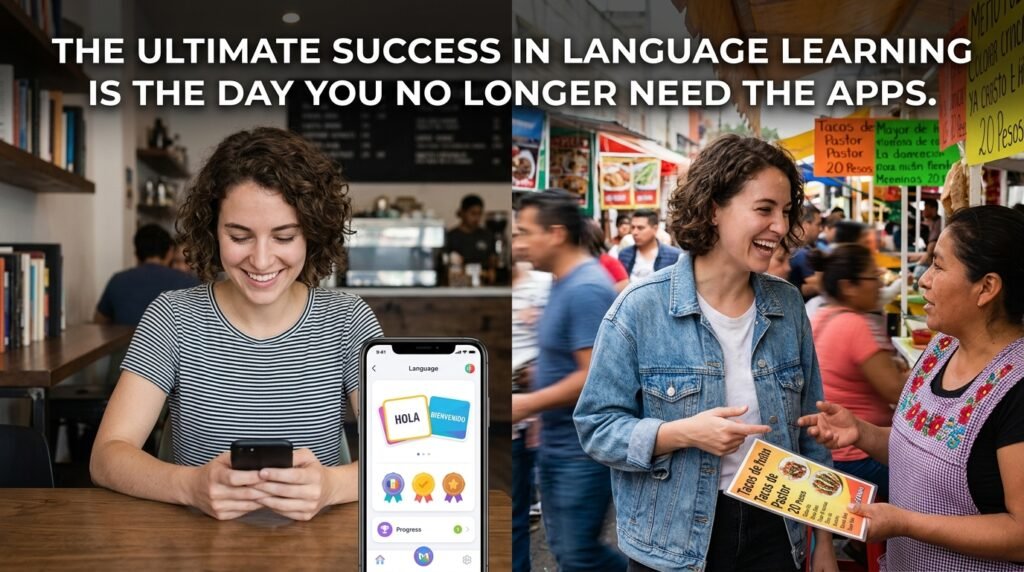
The ultimate success in language learning is the day you no longer need the apps.
I realized that I was winning when I spent more time on YouTube watching native content than I did on my language learning tools. I was winning when I could read a news article about basketball statistics without reaching for a dictionary.
The apps are training wheels. They are there to get you to a basic level of comprehension so you can go out and engage with the real world. Many people get addicted to the training wheels. They are afraid to ride the bike on the open road.
I forced myself to start “riding the bike” as early as possible. I used the apps to learn the top five hundred most frequent words, and then I jumped into real content. It was painful. It was messy. But it was real.
Advice for Choosing Your Tools
If you are looking at your phone right now, overwhelmed by the options, I have a simple piece of advice.
Pick one tool for vocabulary that allows for custom input. Pick one source of audio that you actually enjoy. Set up a simple automation to make those tools easy to access. And then, most importantly, stop looking for new apps.
The search for the “best” app is often just a form of procrastination. We spend hours researching tools because it is easier than actually doing the work of memorizing a sentence or practicing a sound.
The best tool is the one that you actually use every single morning while your coffee is brewing. It does not have to be pretty. It does not have to be fun. It just has to be effective.
I found that my phone is either a weapon or a distraction. By carefully selecting my apps and automating my environment, I turned it into the most powerful weapon in my language learning arsenal. Stop playing games and start building your custom system today. The real world is waiting for you to stop tapping buttons and start speaking. Every minute you spend in a “fun” app is a minute you could have spent in a real conversation. Choose the path of most resistance, because that is where the growth is.

Gabriel Henrique is a language enthusiast and productivity writer. After testing countless study methods, he became obsessed with mastering new languages efficiently. He achieves this without burnout, without endless grammar drills, and without losing focus. At Blog The Curious, he shares everything he has learned along the way.