
I manage multiple specialized digital publishing websites. I draft detailed privacy policies. I build complex internal link strategies for several different domains. I also track professional basketball statistics. I run intense data models analyzing first-action metrics like points, rebounds, and assists during the NBA playoffs. My daily schedule is incredibly tight. My brain processes massive amounts of analytical data every single day.
By the time I finish my professional work, my mental battery is completely empty.
When I first decided to learn a foreign language, I relied entirely on smartphone applications. I downloaded the most popular software. I paid for the premium subscriptions. I told myself I would study for one hour every single night after work.
I maintained that schedule for exactly four days. On the fifth day, a website server crashed. I spent four hours fixing the backend code. When I finally sat down on my couch, I looked at the language app icon on my phone. I felt completely exhausted. I did not open the app. I told myself I would double my study time tomorrow. Tomorrow never happened. The habit died instantly.
I realized a brutal truth about digital learning. Downloading an application does not magically create discipline. Software cannot generate human willpower. You have to actively engineer your own consistency. You have to build a mechanical system that completely ignores your daily feelings. Here is exactly what helped me stay strictly consistent using language apps.
The Toxic Nature of Motivation
You cannot rely on motivation to learn a language. Motivation is a highly volatile emotion. It is completely unreliable.
Motivation spikes violently when you buy a new tool. You feel a massive rush of excitement when you download a new flashcard application. You love the bright colors. You love the crisp digital sound effects. Your brain releases a heavy flood of dopamine.
This chemical rush always disappears. After a week, the bright colors become boring. The sound effects become annoying. The vocabulary gets much harder. The dopamine dries up completely. When the motivation vanishes, you simply stop opening the application.
You must accept that studying a language is often incredibly boring. It is a slow, grinding process of daily repetition. You have to stop waiting for a magical feeling of excitement. You have to replace fragile motivation with cold, hard physical routine.

Anchoring the App to a Physical Ritual
Digital habits are very weak because they float abstractly in your phone. You have to anchor the digital software directly to a permanent physical reality.
I used my morning routine to create an unbreakable physical anchor. I am deeply obsessed with specialty coffee. I brew Ethiopian Guji beans every single morning. I use a strict V60 pour over method. I weigh the beans perfectly on a digital scale. I monitor the exact water temperature with a precise gooseneck kettle.
This physical ritual happens every single day. I never skip it. I never need willpower to make my coffee.
I tied my language application strictly to this physical process. While the hot water drained through the paper filter, I picked up my smartphone. I opened my spaced repetition flashcard app. I reviewed vocabulary for exactly three minutes while the coffee brewed.
The physical action of pouring the water became the absolute trigger for the mental action of studying. I did not have to make a decision. The environment made the decision for me. If you want to map out your own physical anchors, you must learn How I Created a Study Plan That Actually Fit My Life to guarantee you build a sustainable routine.
The Power of Mobile Automation
I possess a deep interest in mobile software and task optimization. I build scripts to automate repetitive actions. I realized I could use the native software on my smartphone to completely hijack my own bad habits.
I opened the shortcuts application on my device. I created a highly specific digital rule. I designed the script to execute automatically at exactly seven o’clock every morning.
At seven o’clock, my phone changed its entire visual layout. It actively hid my email application. It hid my web browser. It blocked my access to social media. The software replaced those heavy distractions with a single, massive folder on my home screen. This folder contained only my core language learning application.
I removed the heavy burden of choice. When I picked up my phone to drink my coffee, I did not have to debate what to do. The phone presented only one viable option. I tapped the application and started learning immediately.
Killing the Digital Gamification
Application developers are desperate for your attention. They use aggressive gamification to keep you addicted to their software. They use daily streaks, digital gems, and competitive leaderboards.
These gamified features are highly toxic to actual consistency.
They force you to prioritize the software over the actual learning process. I found myself opening the language application at midnight just to tap a single random button. I did not care about learning new vocabulary. I just wanted to keep my digital streak alive. I was serving the algorithm instead of building my fluency.
I deliberately broke my streak. I let the digital counter reset to absolute zero.
It felt incredibly liberating. It reminded me that the software works for me. I do not work for the software. I stopped looking at the gamified charts. I started tracking my consistency using a simple paper calendar on my desk. I put a black mark on the calendar every time I completed a focused, high quality study session. Analog tracking is honest. Digital tracking is manipulative.
Sourcing Wild, Relevant Data
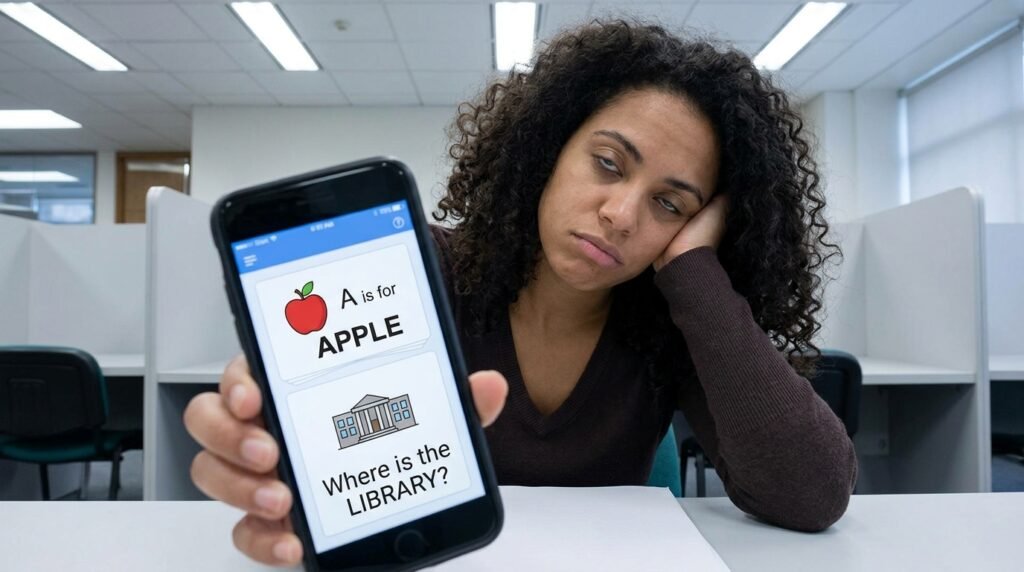
The default vocabulary lists in most language apps are completely useless. They teach you how to order an apple. They teach you how to ask for directions to a generic library.
This generic data destroys your consistency because it bores your brain to death. Your brain actively deletes information it deems irrelevant to your daily survival.
I started treating my flashcard application like an empty notebook. I deleted the default lists. I sourced my own wild data directly from my personal passions.
I love digital photography. I spend hours editing studio portraits. I focus on preserving precise facial geometry. I study the retro aesthetics of 35mm film and Canon IXUS flashes. I took this highly specific terminology and fed it directly into my language app. I learned the foreign words for shutter speed, aperture, and exposure.
I did the same thing with my professional basketball analytics. I added the foreign terms for statistical probability, rebounding, and point spreads. If you struggle with boring default lists, look at The Mistake I Was Making With Vocabulary (And How I Fixed It) to learn how to source highly relevant words. When you populate your app with vocabulary you actually care about, you genuinely want to open the software every day.
The Two Minute Contract
The biggest hurdle to consistency is the initial moment of task initiation. Looking at a massive deck of one hundred due flashcards feels completely overwhelming. Your tired brain sees that massive mountain of work and immediately searches for an excuse to quit.
I bypassed this mental block using a strict two minute contract.
I made a firm deal with myself. I promised my brain that I only had to use the language app for exactly two minutes. I set a timer. Once the two minutes expired, I had total permission to close the app and walk away with zero guilt.
The barrier to entry became incredibly low. Anyone can survive two minutes of studying.
A fascinating psychological shift happens when you use this trick. Once you actually open the app and complete the first flashcard, the heavy friction disappears. You build immediate momentum. Ninety percent of the time, I ignored the two minute timer entirely. I kept studying for twenty minutes. Getting started is the only hard part. The two minute contract completely destroys daily procrastination.
Purging the Digital Graveyard
Having too many options creates massive decision fatigue. I used to have twenty different language apps installed on my device. I had apps for grammar. I had apps for reading. I had apps for speaking to native tutors.
Every morning, I spent ten minutes just deciding which app to open. That decision drained my mental energy before I even started studying.
I ruthlessly purged my digital graveyard. I deleted nineteen applications. I kept one single spaced repetition flashcard tool. If your phone is crowded with useless software, review How I Avoid Wasting Time With Ineffective Apps to completely clean up your home screen.
One highly effective tool used daily is infinitely better than ten mediocre tools used occasionally. Streamlining your digital environment removes the noise and forces extreme focus.
Transitioning from Consumer to Creator
Applications naturally train you to be a passive consumer. You stare at the screen. You read a sentence. You translate it. You tap a button and move on. You never actually create anything original.
Passive consumption is boring. It leads directly to app fatigue. You must break this cycle by shifting into a creator mindset.
When my application showed me a new vocabulary word, I did not just memorize the default definition. I pulled out a physical notebook. I forced myself to write three completely original sentences using that exact word. I wrote sentences about my digital publishing business. I wrote sentences about my weekend plans.
I forced my brain to actively manipulate the new vocabulary. I took ownership of the data. Integrating physical writing into my digital study routine made the process highly active and deeply engaging.
The Forgiveness Protocol
You will miss a day of studying. This is a statistical certainty. A major server will crash at work. You will get incredibly sick. You will travel across time zones. You will simply forget to open the app.
Beginners view a single missed day as a complete and total failure. They feel massive guilt. They abandon the entire habit because the perfect streak is broken.
I built a strict forgiveness protocol to survive these inevitable failures. Missing one single day is completely acceptable. Missing two days in a row is strictly forbidden.
If I missed a Tuesday, I did not panic. I did not double my workload on Wednesday to catch up. I just executed my normal Wednesday routine. This rule prevents a single minor mistake from turning into a permanent behavioral collapse. It keeps the long term momentum alive.
Treating the App as a Bridge
You must define the exact purpose of the application. An app is not a permanent home. It is a temporary bridge to the real world.
If you view the app as the final destination, you will eventually quit. Tapping a screen is not a rewarding long term life goal.
I used my application strictly to memorize raw, isolated vocabulary. Then, I immediately left the application to look for those exact words in real native content. I listened to native sports podcasts. I read native photography blogs.
When I heard a word in a real podcast that I had just learned in my app, the feeling was absolutely incredible. The app provided the key, and the real world provided the lock. Knowing that the app was just a tool to help me understand actual human conversations gave me a massive, sustainable sense of purpose.
The Weekly Digital Fast
To maintain a healthy relationship with your software, you must occasionally cut the digital cord entirely.
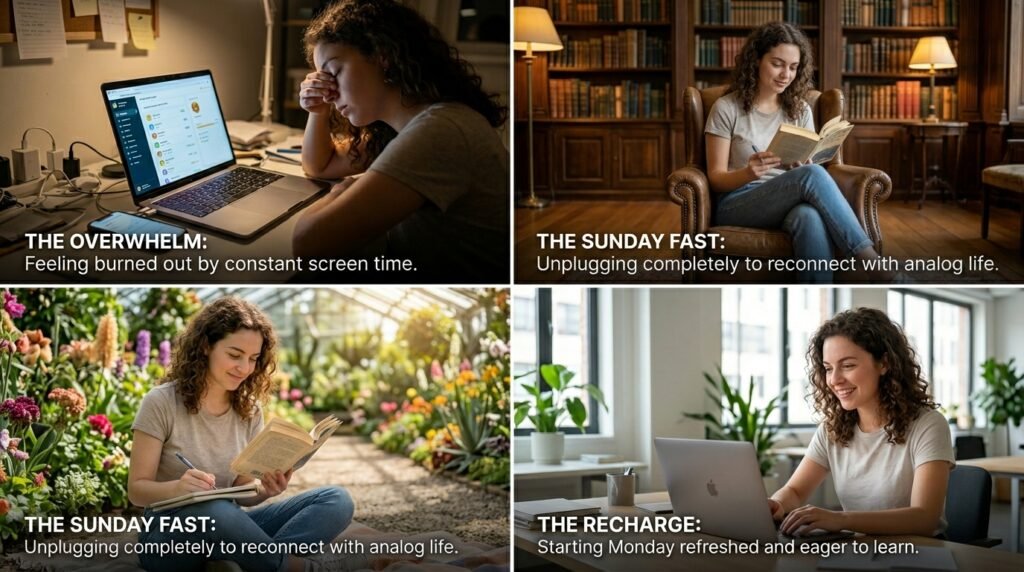
I instituted a mandatory digital fast every single Sunday. On Sundays, I refused to open my language learning application. I did not use digital dictionaries. I stayed completely away from the glowing screen.
I forced myself to interact strictly with analog materials. I read physical books. I wrote sentences by hand. I spoke out loud to myself in the kitchen.
This weekly fast resets your brain. It prevents digital burnout. When Monday morning arrives, you actually look forward to opening the application again. Absence creates desire.
The Power of Boring Repetition
Consistency is not glamorous. It does not look exciting on social media. It is just the act of doing the exact same boring thing every single day.
You must learn to love the boring repetition. You must embrace the absolute monotony of reviewing flashcards while your coffee brews. The repetition is exactly where the magic happens. It is where the conscious, highly frustrating effort drops deeply into your unconscious physical reflexes.
Stop looking for the perfect app. Stop waiting for a massive wave of motivation to hit you. Pick up your smartphone right now. Delete the distracting garbage on your home screen. Set up your mobile automation. Build your physical anchor. Open the single best tool you possess, set your timer for two minutes, and execute the work. Building daily consistency is a cold, mechanical choice. Make the choice today, protect it fiercely, and your fluency will become absolutely inevitable.

Gabriel Henrique is a language enthusiast and productivity writer. After testing countless study methods, he became obsessed with mastering new languages efficiently. He achieves this without burnout, without endless grammar drills, and without losing focus. At Blog The Curious, he shares everything he has learned along the way.