
I manage several digital content platforms for a living. My work requires intense focus. I spend my days building niche websites, writing long form articles, and tracking mobile productivity trends. By the time I log off my computer at night, my cognitive battery is completely dead.
Two years ago, I decided to learn a new language. I approached it the exact same way I approach a new business project. I bought books. I mapped out aggressive milestones. I told myself I would study for two hours every single night after work.
I lasted exactly eleven days.
On the twelfth day, I stared at a foreign grammar table. My eyes lost focus. The text blurred together. I felt a deep, physical exhaustion in my chest. I closed the textbook and went to sleep. I did not open it again for three months.
I had hit a massive wall of burnout. I was trying to force a high energy task into a low energy time slot. I realized that balancing a demanding career and a new language is not a scheduling problem. It is an energy management problem.
This guide breaks down the exact system I built to learn a language without destroying my mental health. I stopped fighting my own exhaustion. I redesigned my entire approach to fit seamlessly into a busy professional life.
Mini-Summary: The Energy Deficit You cannot force your brain to absorb complex new information when it is completely drained from a workday. Balancing work and study requires you to track your cognitive energy, not just your available minutes.
The Myth of Free Time
Professionals always talk about finding time. They assume there are hidden hours scattered throughout the week just waiting to be discovered.
Free time is a complete illusion. Your work will always expand to fill the space you give it. If you have an empty hour on a Tuesday evening, you will inevitably use it to check emails, clean the kitchen, or scroll mindlessly on your phone to decompress.
You do not find time. You allocate energy.
I sat down and conducted a brutal audit of my daily energy levels. I used a simple spreadsheet. I tracked how I felt at 6:00 AM, 12:00 PM, 6:00 PM, and 9:00 PM.
The data was incredibly clear. My peak mental sharpness occurred between 7:00 AM and 10:00 AM. By 3:00 PM, my focus began to dip. By 8:00 PM, I was only capable of passive consumption. I could watch a television show. I could not conjugate irregular verbs.
My failure had nothing to do with discipline. I was simply asking my brain to sprint a marathon at the end of a very long day.
I knew I had to move my study session. I secured my learning habit by moving it to the absolute beginning of my day, before the demands of my websites and clients could drain my tank.

Creating the Morning Buffer Zone
Moving a study session to the morning is difficult. If you just wake up and immediately stare at a textbook, you will feel miserable. You need a buffer zone to transition from sleep to deep focus.
I rely on physical rituals to signal my brain.
I am deeply passionate about specialty coffee. I do not use automatic machines. I brew a manual V60 pour over every morning. I usually use a light roast Ethiopian Guji bean. The entire process takes exactly six minutes. I weigh the beans. I boil the water. I pour slowly.
This six minute window became my buffer zone.
I placed my language notebook directly next to my coffee scale. I did not sit at my work desk. My work desk is a place of stress and deadlines. I sat at the kitchen counter.
While the coffee bloomed, I reviewed my vocabulary from the day before. The aroma of the coffee and the quiet of the early morning became the physical triggers for my study habit. I drank my coffee and read a short article in my target language.
The entire session lasted twenty minutes.
Twenty minutes sounds entirely insignificant. But twenty minutes completed with a fresh, focused brain is vastly superior to two hours of exhausted, distracted reading at night. I protected those twenty minutes ruthlessly.
Mini-Summary: The Morning Anchor Move your intense study sessions to your peak energy hours. Create a physical morning ritual, like brewing coffee, to transition smoothly into learning before the workday begins.
The Danger of Context Switching
Burnout often happens because we fail to separate our tasks.
If you try to study a language while keeping your work email open in another tab, you will fail at both. Your brain cannot process foreign syntax while simultaneously worrying about a client deliverable. This constant jumping back and forth is called context switching.
Context switching destroys your cognitive reserves. It takes your brain roughly twenty minutes to refocus on a complex task after an interruption.
I had to build strict physical and digital boundaries between my career and my language learning.
When I studied, my phone went into another room. I closed every single browser tab related to my niche websites. I turned off my smartwatch. I gave the language my absolute, undivided attention.
I applied The Strategy That Helped Me Stay Focused While Studying to my entire daily routine. I treated my twenty minute language block with the exact same respect I give to a massive business contract. Complete isolation is the only way to absorb information quickly.
Harnessing the Power of Dead Time
You cannot reach fluency on twenty minutes a day alone. You need volume. But you cannot add more active study time without risking burnout.
The solution is leveraging your dead time.
Dead time consists of the automated physical tasks you perform every day that require zero mental effort. Driving to the grocery store is dead time. Folding laundry is dead time. Washing dishes is dead time.
During these moments, your body is busy, but your mind is completely empty.
I realized I was wasting at least two hours of dead time every single day listening to familiar music or worrying about work. I decided to reclaim those hours for passive immersion.
I stopped listening to English podcasts. I found audio content in my target language. I did not look for complex grammar lessons. I looked for natural conversations.
When I drove to the gym, the target language was playing in my car. When I cooked dinner, a foreign news station played on my kitchen speaker.
I did not understand every word. That was not the objective. The objective was constant, low stress exposure. I let the rhythm and cadence of the language wash over me while my hands did the work. Passive listening adds massive volume to your learning without adding any cognitive fatigue.
Mini-Summary: Reclaim Your Dead Time Identify the physical chores in your day that require no mental effort. Fill these gaps with foreign audio. This passive exposure builds massive volume without causing mental exhaustion.

Transforming Digital Distractions
My smartphone was a massive source of work stress. I constantly checked site analytics, ad revenue dashboards, and email notifications. Every time I unlocked my screen, my blood pressure spiked.
I needed to turn this device from a stress trigger into a learning tool.
I completely changed my digital environment. I deleted the social media applications that drained my energy. I changed the default operating language of my phone to my target language.
This single change was highly disruptive for three days. I had to navigate my settings purely through muscle memory. But very quickly, I learned the vocabulary for navigation, calendars, and basic technology simply by existing in the new interface.
I focused on How I Turned My Phone Into a Learning Tool to ensure my screen time was productive. I placed a minimal flashcard application on my home screen right where my email icon used to be.
When I stood in line at the bank, my instinct was to check my phone. Instead of opening my email, my thumb naturally tapped the flashcard app. I knocked out ten vocabulary reviews in two minutes.
These tiny digital interactions compound rapidly. They integrate the language directly into your existing habits without requiring massive blocks of dedicated study time.
Tying the Language to Your True Hobbies
The fastest way to burn out is to force yourself to read boring material.
Most language courses make you read dialogues about booking hotel rooms or ordering a train ticket. After a stressful day of managing websites, the absolute last thing I wanted to do was read a fictional conversation about public transit.
I realized I needed to connect the language to the things I actually enjoy. I needed to use the language as a tool to explore my personal interests.
Outside of my digital work, I am fascinated by traditional Japanese art. I specifically study the Irezumi style and its deep connection to historical folklore. I love learning the symbolism behind serpent motifs, kitsune legends, and the historical use of the katana.
I stopped reading generic textbook stories. I started translating foreign articles about traditional ink techniques and mythological creatures.
The entire process changed. It no longer felt like a tedious language exercise. It felt like a deep dive into a topic I genuinely loved. I wanted to know what the article said. The language simply became the vehicle to get the information.
Find your anchor interest. If you love fitness, watch foreign workout videos. If you love baking, translate foreign recipes. When the material is inherently interesting to you, the friction disappears. You learn the vocabulary naturally because you actually care about the context.
Mini-Summary: Leverage Your Passions Do not study generic, boring topics. Use the target language to research your existing personal hobbies. The desire to understand the topic will override the fatigue of learning new words.
The Two Day Forgiveness Rule
Perfectionism is a massive catalyst for burnout.
When ambitious professionals start a new habit, they demand a perfect streak. They want to study for 365 days in a row. They download habit trackers and watch the streak grow.
Then life inevitably happens. You get sick. A server crashes and ruins your work day. You miss a study session.
When a perfectionist breaks a streak, they experience intense guilt. They feel like a failure. They assume the entire system is ruined, so they quit entirely.
I had to build resilience into my system. I created a strict forgiveness policy. I called it the two day rule.
I am fully allowed to miss one day of studying. I will not feel guilty. I will not beat myself up. I accept it as a normal part of a busy adult life.
However, I am never allowed to miss two days in a row.
Missing one day is a minor scheduling conflict. Missing two days is the foundation of a new, negative habit. This rule removed all the pressure. I knew exactly How I Stopped Procrastinating My Language Learning by removing the toxic guilt associated with skipping a day. I gave myself grace, but I kept the boundaries firm.
Setting the Five Minute Baseline
Even with perfect scheduling, you will have days where you are entirely exhausted. You will stare at your coffee, look at your notebook, and feel a deep sense of dread.
During my first attempt at learning, I would just skip these days entirely.
I learned to install a baseline protocol. Your baseline is the absolute minimum amount of effort required to keep the habit alive.
My baseline is exactly five minutes.
If I wake up completely drained from a terrible night of sleep, I do not force a full twenty minute session. I do not open a complex grammar lesson. I lower the bar to the floor.
I open my book, read a single paragraph, review three flashcards, and close the book. The session takes five minutes.
Five minutes of study will not make you fluent. But five minutes guarantees that you check the box for the day. You protect your identity as a learner. You prevent the habit from dying. Checking that box, even with minimal effort, preserves the momentum you need to tackle a heavier session the following day.
Mini-Summary: Establish a Baseline Create a five minute minimum protocol for your worst days. Doing a tiny amount of work prevents you from breaking the habit entirely. Protect the momentum at all costs.
The Importance of Hard Stops
Work expands to fill the time available. If you do not set boundaries, your job will consume every hour of your life.
I used to answer work emails at 10:00 PM. I would check site traffic analytics while lying in bed. My brain never fully detached from my career. This constant state of low level anxiety drained the cognitive resources I needed for language learning.
I instituted a hard stop protocol.
At 6:00 PM every evening, I shut down my laptop. I physically close the screen. I do not look at work email on my phone. I do not review spreadsheets. The work day is definitively over.
This physical separation is crucial. Your brain needs time to rest and consolidate information. If you constantly drip feed stress into your mind, you will never have the mental clarity required to learn a complex new skill.
Respect your rest. Detach from your professional identity completely in the evenings. The websites will survive until tomorrow morning.
Tracking Input, Not Fluency
A major source of burnout is measuring the wrong metric.
Beginners often judge their success by how fluent they feel. They attempt to have a conversation, stumble over their words, and feel deeply discouraged. They put in hours of work, but the results feel invisible.
Fluency is a lagging indicator. You cannot control it on a daily basis.
If you measure your success by your fluency, you will burn out from frustration. You must track the only metric you can actually control. You must track your input.
I created a simple spreadsheet. Every day, I logged the total number of minutes I spent actively studying and passively listening. That was it.
I stopped worrying about my pronunciation. I stopped stressing over forgotten vocabulary. I focused entirely on making the total hours go up. If I put in the hours, I knew the acquisition would happen naturally in the background.
This mental shift removed all the performance anxiety. I just did the daily work and trusted the volume.

Final Thoughts on Sustainable Growth
Balancing a demanding career and a new language is entirely possible. It just requires you to drop the illusion of the perfect student.
You do not need to study for two hours a night. You do not need to memorize massive lists of words you will never use.
You need a sustainable machine.
Audit your energy levels and move your heavy lifting to the morning. Reclaim your dead time with passive audio. Turn your phone into a tool instead of a distraction. Connect the language to the hobbies that already bring you joy.
Most importantly, forgive yourself when you stumble.
Language learning is a multi-year project. It is a marathon that you run while carrying the weight of your professional life. Build a system that respects your exhaustion, and you will eventually reach the finish line. Start tomorrow morning with a cup of coffee and five minutes of focus. The rest will follow.
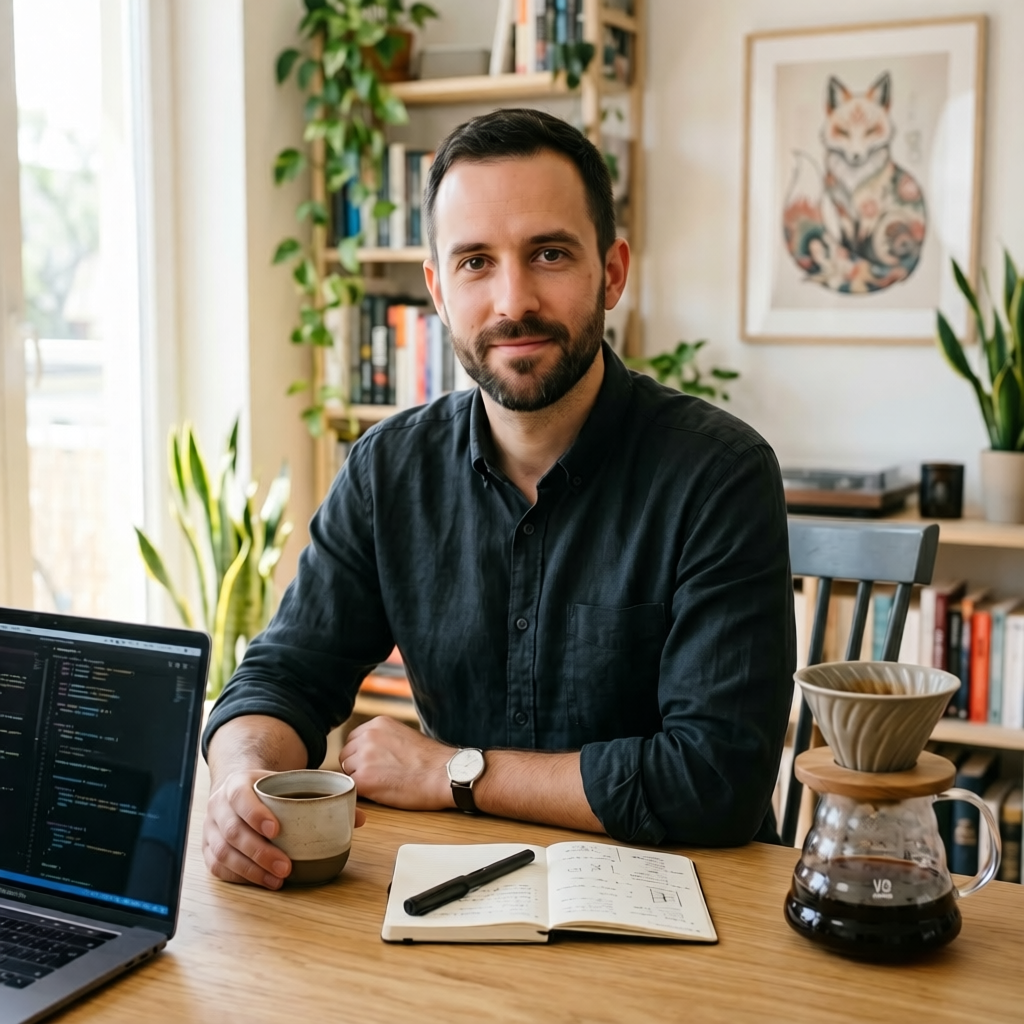
Gabriel Henrique is a language enthusiast and productivity writer. After testing countless study methods, he became obsessed with mastering new languages efficiently. He achieves this without burnout, without endless grammar drills, and without losing focus. At Blog The Curious, he shares everything he has learned along the way.