
We have all been there. It is 10:00 PM. You are sitting at your desk with a stack of flashcards or a language app open. You feel like a genius. You have just “learned” twenty new words. You can recite them perfectly. You go to bed feeling accomplished, dreaming of the day you will finally be fluent.
Then morning comes. You wake up, grab your coffee, and try to remember just one of those words. Nothing. Your brain is a blank slate. It is as if those twenty words never existed. You feel frustrated, defeated, and like your memory is a broken bucket.
I lived in this cycle for years. As a digital publisher managing multiple niche blogs, I am used to processing massive amounts of data. I can tell you the SEO rankings for coffeenerdlab.com or the exact probability of an NBA first basket milestone. But foreign vocabulary? It felt like my brain had a “spam filter” specifically designed to delete new words the moment I closed my eyes.
I finally broke the cycle when I realized that I was treating my brain like a hard drive. Your brain is not a hard drive. It is a survival organ. It is designed to delete information that it thinks is useless. If you want to stop forgetting words, you have to prove to your brain that those words are vital for your survival, your happiness, or your identity.
Here is exactly how I stopped the “one day forget” cycle and started building a vocabulary that actually sticks.
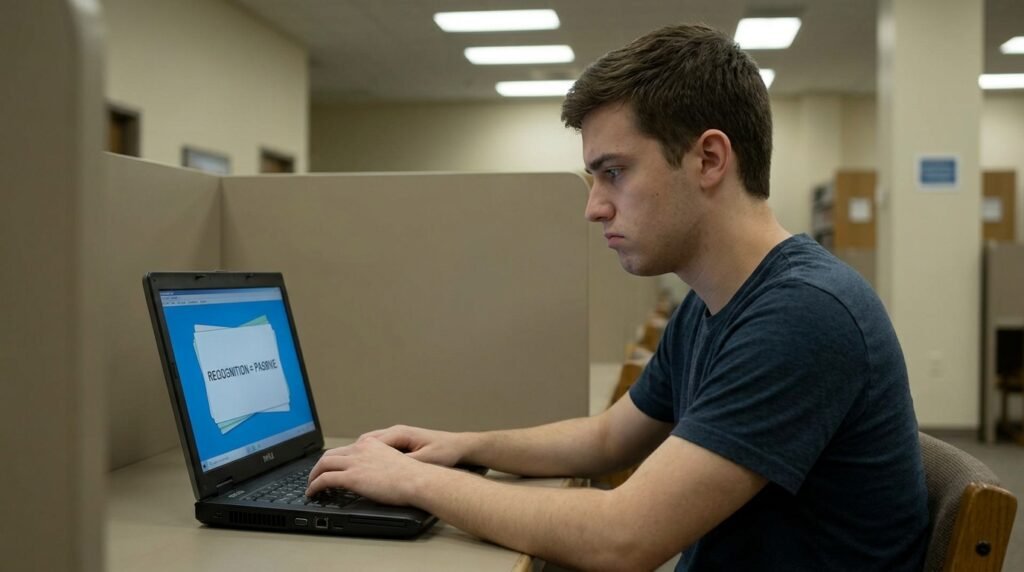
The Myth of Passive Recognition
The biggest mistake I made was confusing “recognition” with “knowledge.” When you see a word on a screen and you know what it means, that is passive recognition. It is easy. It requires almost zero brain power.
Your brain knows this is a low stakes activity. It sees the word, identifies it, and then throws it in the “temporary storage” bin. Because you didn’t have to struggle to find the word, your brain assumes it isn’t important.
I stopped the brute force approach when I realized How I Learned New Words Without Memorizing Lists and focused on real usage. If you don’t fight for the word, you won’t keep the word. You have to force your brain to retrieve the information from the dark corners of your memory. This “active recall” is the only thing that builds permanent neural pathways.
The 24-Hour Production Rule
I developed a strict rule for my vocabulary: If I don’t produce the word within 24 hours of seeing it, I consider it lost.
Production doesn’t mean looking at a flashcard. It means using the word in a unique, personal sentence that relates to my actual life. I don’t use the generic sentences found in textbooks. I don’t care about “The boy is under the table.” I care about my morning routine, my work, and my passions.
If I learn the word for “roast,” I apply it to my Ethiopian Yirgacheffe beans. I might say: “This roast is a bit too dark for these floral notes.” If I learn the word for “frustration,” I apply it to a Vasco da Gama soccer match.
By tying the word to a real experience or a real emotion within 24 hours, I am signaling to my brain that this word is a tool I need. I am moving it from the “junk” pile to the “utility belt.”
The Sensory Anchor Technique
The brain loves senses. It remembers the smell of rain, the taste of a bitter espresso, and the sound of a crowd at a stadium. It does not naturally remember black ink on a white screen.
I started “anchoring” my vocabulary to physical sensations. When I learn a word for “bitter,” I don’t just think of the definition. I take a sip of my coffee, focus on the bitterness on the back of my tongue, and say the word out loud.
This creates a multi-dimensional memory. I am not just remembering a sound. I am remembering a taste and a physical sensation. This change in my mental filing system was The Simple Habit That Doubled My Vocabulary Retention and it saved me months of frustration.
I apply this to everything. If I learn the word for “leather,” I touch my wallet. If I learn the word for “loud,” I think of the Flamengo vs. Vasco derby at the Maracanã. The more senses you involve, the harder it is for your brain to delete the data.
High-Stakes Emotional Anchoring
We never forget the words that make us feel something. You probably remember exactly what someone said to you during a bad breakup or a massive professional win. Emotion is the “save button” of the human mind.
I decided to use my interests to generate this emotion. I follow the NBA closely, and I use performance statistics for betting analysis. I am looking for high probability players for rebounds or assists. When I am analyzing these stats in my target language, I am focused. I am stressed. I am excited.
When I learn a word in the context of a game I have money on, I never forget it. The stakes are high. My brain knows that if I misunderstand a word like “probability” or “injury report,” there are real world consequences.
You don’t have to bet on sports to do this. You just have to find what makes you feel alive. If you love Kitsune themed tattoo designs, learn your vocabulary through the stories of Japanese folklore. If you love cooking, learn it through the high pressure environment of a new recipe. Find the emotion, and the words will follow.
The “Thinking Out Loud” Protocol
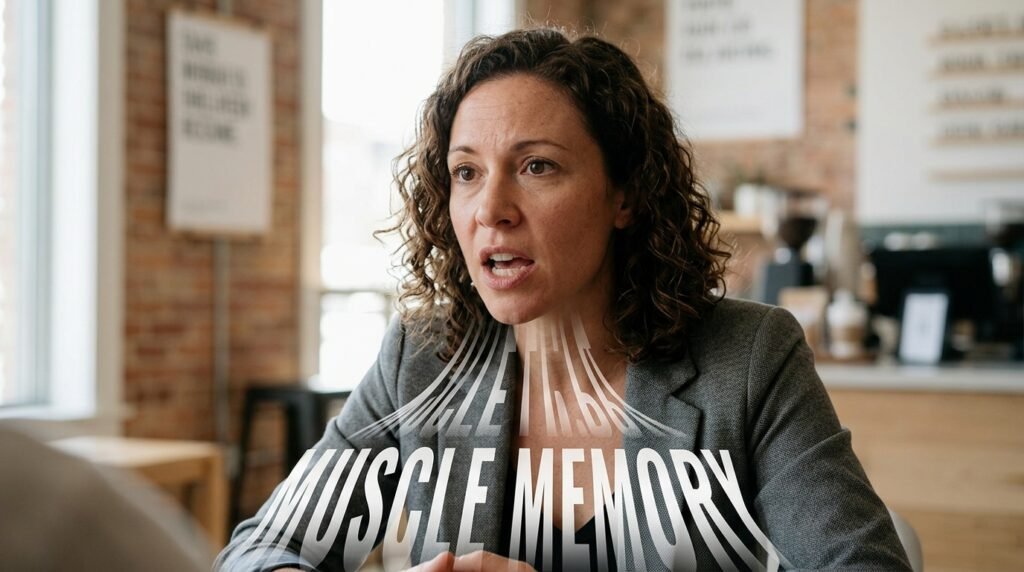
One reason we forget words after a day is that we only “see” them. We don’t “feel” them in our mouths. Speaking is a physical skill, like playing the piano or shooting a free throw. It requires muscle memory.
I started a habit of narrating my day like a sports commentator. As I work on my blogs, I talk to myself. “I am writing a new SEO title. The keywords look good. I need to check the internal links.”
I do this in the target language. It forces me to reach for words constantly. It exposes the gaps in my memory immediately. If I can’t remember the word for “title,” I look it up, use it, and because I used it in a real task, it sticks.
I finally bridged the gap between knowing and doing by applying What Helped Me Actually Use the Words I Learned in my daily conversations. You have to get the words out of your head and into the air. If the words stay in your mind, they die there.
The “Low Energy” Review Strategy
Most people try to do their hardest vocabulary work when they are already exhausted at the end of the day. This is a mistake. Your brain’s “trash collector” is most active when you are tired.
I changed my schedule. I do my “new” word acquisition in the morning, when I am fresh and fueled by caffeine. I save my “review” for the evening.
But I don’t just look at a list. I use “Spaced Repetition” but in a human way. I try to explain a concept to an imaginary friend. I try to write a short, three sentence story using the words I learned that morning.
If I can’t find the word, I don’t get frustrated. I just look at it again and realize that the act of “forgetting and then re-finding” is actually what makes the memory permanent. Forgetting is not the enemy. Forgetting and not looking it up again is the enemy.
Digital Environment Integration
I stopped treating my language study as a separate part of my life. I integrated it into my digital workspace.
I changed the language of my smartphone. I changed the interface of my content management systems. This forces me to interact with the language hundreds of times a day.
When you see the word for “Delete” or “Upload” every time you work, you stop forgetting it. It becomes part of your functional reality. You don’t “study” it anymore. You just use it to get your job done.
This constant, low level exposure is vital. It keeps the language “warm” in your brain. It prevents the cold start that usually happens when you only study once a day.
The Power of Niche Interests
Traditional language courses are boring. They teach you how to ask for directions to a library you will never visit. Boring information is the first thing your brain deletes.
I focused on my niches. I learned the vocabulary of:
-
Specialty Coffee: Extraction, acidity, bloom, roast profiles.
-
Digital Marketing: Conversion rates, organic traffic, backlinks.
-
Sports Analytics: Points in the paint, defensive rating, spread.
-
Tattoo Art: Linework, shading, traditional motifs.
Because I am genuinely interested in these topics, I want to know the words. My brain doesn’t have to be forced to remember them. It is hungry for them.
If you are a beginner, stop following the generic path. Find your “tribe” in the target language. Join a forum for Vasco fans. Read a blog about Ethiopian coffee history. Follow a Kitsune artist on Instagram. When the content is compelling, the vocabulary is effortless.
The “Island of Fluency” Method
I stopped trying to learn “the language” and started learning “islands.” An island is a specific topic that I can talk about for three minutes without stopping.
One island is my coffee routine. Another island is my job as a publisher. Another island is why I think the NBA playoffs are more exciting than the regular season.
I focused all my vocabulary efforts on building these islands. I learned every word I needed to describe these specific things. Once an island is built, it stays. It becomes a permanent part of your personality in the new language.
You can then build bridges between these islands. This is much more effective than knowing a few thousand random words that don’t connect to each other.
Sleep is the Final Step
You don’t actually learn when you are awake. You learn when you are asleep. This is when your brain takes the “temporary” files of the day and decides which ones to move to “long-term storage.”
I noticed that if I reviewed my new words ten minutes before turning off the lights, my retention doubled. I wasn’t doing a heavy study session. I was just giving my brain a “final hint” about what was important.
I look at my three most important words of the day right before bed. I say them. I visualize them. Then I go to sleep. My brain spends the night building those neural connections.

Summary of the “No Forget” Strategy
If you want to stop the one day forget cycle, you need to change your relationship with the language.
-
Move from recognition to production. Don’t just look at the word. Use it.
-
Apply the 24-hour rule. Use the word in a personal sentence immediately.
-
Anchor the words to your senses. Taste, smell, and touch the language.
-
Use your passions. Anchor words to the things that already excite you.
-
Talk to yourself. Build the muscle memory in your mouth.
-
Review before sleep. Give your brain the final instruction for the night.
Language is not a collection of definitions. It is a way of experiencing the world. When you stop treating words like data and start treating them like experiences, they stop disappearing.
I still have days where I forget things. I still struggle with complex grammar sometimes. But the “blank slate” mornings are over. The words I learn today are the words I will use tomorrow.
Stop being a student and start being a speaker. Your brain is ready to remember. You just have to give it a reason to care. Grab your coffee, find a topic that excites you, and start using the language to describe your real life. The vocabulary will stick because it is finally home.

Gabriel Henrique is a language enthusiast and productivity writer. After testing countless study methods, he became obsessed with mastering new languages efficiently. He achieves this without burnout, without endless grammar drills, and without losing focus. At Blog The Curious, he shares everything he has learned along the way.