I spent six years in a traditional classroom trying to learn a second language. By the end of it, I could conjugate a few irregular verbs on a piece of paper, but I couldn’t understand a simple weather report. I felt like a failure. I assumed my brain just wasn’t wired for languages. I thought I lacked the “language gene” that all the polyglots on the internet seemed to have.
It wasn’t until I hit my thirties and started my career as a digital publisher that I decided to try again. But this time, I made a deal with myself. No textbooks. No vocabulary lists. No sitting in a room with thirty other people repeating “The apple is red” after a teacher. I wanted to see if I could learn a language the way I learned to build a website or how to brew a perfect cup of Ethiopian coffee: by doing it.
I decided to treat the language like a living thing instead of a dead subject. I stopped being a student and started being a user. This shift changed everything. I finally found a way to navigate the early days when I first began my journey How I Started Learning a Language From Scratch Without Feeling Lost and it felt completely different from my school days.
The Problem With the Classroom
The traditional method is built on a lie. It assumes that if you learn all the rules of a language, you will eventually be able to speak it. It is like trying to learn how to drive by memorizing the blueprints of an internal combustion engine. You might know every part of the car, but you’ll still crash the moment you hit the road.
Classrooms focus on “output” before “input.” They want you to speak on day one. They want you to produce perfect sentences before your ears even know what the language sounds like. This creates an enormous amount of stress. Your brain enters a “flight or fight” mode. When you are stressed, you can’t learn. You just freeze.
I decided to throw the rulebook away. I stopped caring about being “correct” and started caring about being “immersed.”

The Power of Comprehensible Input
If you want to learn a language without traditional methods, you need to understand “Comprehensible Input.” This is a fancy term for a simple concept: you learn by understanding messages. You don’t learn by analyzing grammar. You learn by hearing or reading things that you mostly understand.
I started by watching children’s shows. Then I moved to YouTube vlogs about things I already liked. Since I’m a coffee nerd, I searched for videos of baristas in my target language talking about the natural process of Yirgacheffe beans or the specific acidity of a Sidamo roast.
I didn’t understand every word. I didn’t need to. I understood that they were pouring water. I understood they were talking about flavor. My brain started to connect the sounds to the actions without me ever looking at a translation. This is how we learned our first language as children. We didn’t have dictionaries in the crib. We had context.
The “Hobby-First” Curriculum
Traditional methods use generic topics. They want you to talk about the library, the post office, or the family of a character named John. I don’t care about John. I care about digital marketing, SEO, and tattoo art.
I built my own curriculum based on my interests. I wanted to understand how to describe a kitsune tattoo or how to explain a content strategy. Because I was genuinely interested in the content, I didn’t have to force myself to study. I was just consuming information I already wanted.
When I stopped trying to follow the path everyone else was on, everything became much simpler How I Learned Faster Once I Stopped Overcomplicating Everything and my progress tripled. I wasn’t fighting against boredom anymore. I was following my curiosity.
Using Technology as a Tool, Not a Game
I know many people love language apps because they feel like games. They give you points and streaks. But I found that I was getting really good at the game and staying really bad at the language. I was clicking buttons, not thinking.
I changed how I used technology. I used my phone to find real humans. I used platforms to find tutors who didn’t follow a curriculum. I would show up to a session and say, “Today, I want to talk about why I love medium roast coffee. Help me find the words.”
I also used tools like “Language Reactor” on YouTube. It allows you to see dual subtitles. I would watch a video once with both subtitles, then once with only the target language, and finally once with no subtitles. This “layering” effect trained my ears to catch the words in a natural speed. It wasn’t a game. It was a workout.
The “Living” Routine
Traditional study happens in a block of time. You sit down at 7:00 PM and “study” for an hour. Then you close the book and go back to your native language. This creates a wall between your life and your target language.
I decided to tear that wall down. I made the language a part of every hour of my day.
-
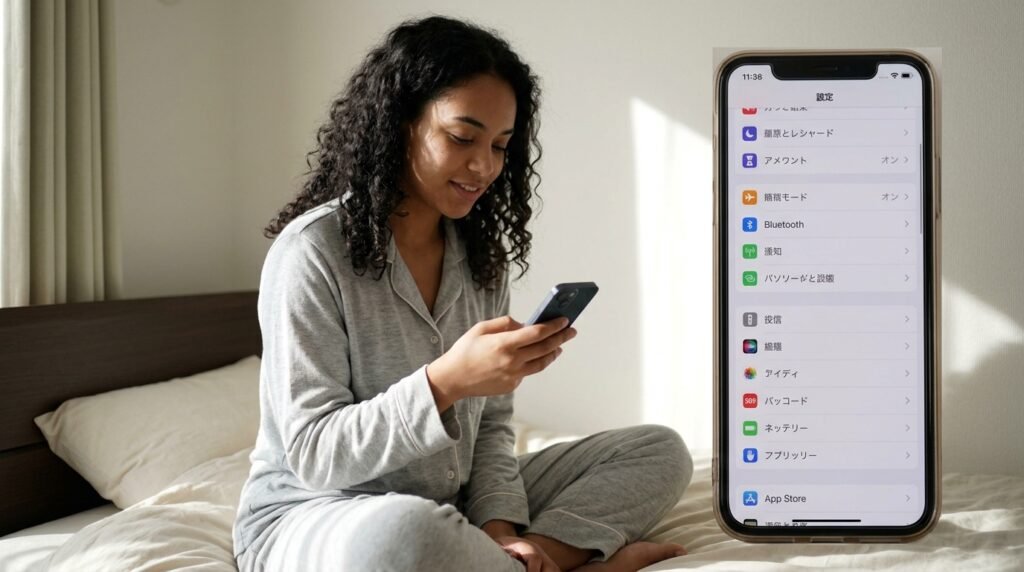
I changed my phone settings to the target language.
-
I only listened to music in that language while at the gym.
-
I narrated my morning coffee routine out loud.
I wasn’t “studying” for an hour. I was “living” in the language for sixteen hours. It wasn’t intense. It was just persistent. This was the structure I finally stuck to How I Built a Routine That Actually Worked for Me and it removed all the friction. The language was just there, all the time.
Ignoring Grammar (On Purpose)
One of the most radical parts of my non-traditional journey was my refusal to study grammar. I decided that if a grammar rule was important, I would see it enough times in my reading and listening to eventually understand how it worked.
This felt wrong at first. I felt like I was cheating. But something amazing happened. After a few months of listening to podcasts, I started to “feel” when a sentence was wrong. I didn’t know why it was wrong. I couldn’t name the grammatical error. But it sounded “off.”
This is how native speakers know their language. They don’t think about the past subjunctive while they are ordering a sandwich. They just know what sounds right. By skipping the grammar tables, I allowed my brain to develop that natural intuition. I was developing a “gut feeling” for the language instead of a “rulebook” for it.
The Shadowing Technique
Since I didn’t have a teacher to correct my pronunciation, I used a technique called “Shadowing.” I would find a piece of audio of a native speaker that I liked. I would play it and try to repeat exactly what they said, at the same time they were saying it.
I tried to mimic their emotion, their speed, and their pitch. I wasn’t just repeating words. I was acting. I was trying to sound like a native speaker, not just a student. This trained the muscles in my mouth and throat. It felt physical. It was like learning a dance.
I did this for ten minutes every day. Within a month, my accent had improved more than it ever did in six years of school. I wasn’t being corrected by a person. I was being guided by the rhythm of the language itself.
The Role of Vulnerability
Traditional methods try to make you feel safe. They give you a controlled environment. But the real world is messy. In the real world, people speak fast, there is background noise, and you will forget the word for “spoon.”
I decided to embrace the mess. I went to local meetups where I was the worst speaker in the room. I ordered food and made mistakes that made people look at me like I was crazy. I realized that my ego was the only thing stopping me.
Once I accepted that I was going to sound like a toddler for a few months, the pressure disappeared. I stopped apologizing for my mistakes. I started seeing them as “data points.” Each mistake was a signal that I needed to pay more attention to a certain area. I was learning through failure, which is the most honest way to learn anything.
Content Creation as Learning
As someone who runs niche blogs, I tried to apply my professional skills to my learning. I started a small, private blog in my target language. I would write short, simple posts about my day or about a coffee I just tried.
Writing for an audience (even a fake one) forced me to think differently. I had to look up how to connect ideas. I had to find ways to make my thoughts clear. I wasn’t just doing an exercise. I was creating something.
When you create something in a language, you “own” those words. They become part of your personal identity. They aren’t just entries in a dictionary anymore. They are tools you used to build something. This “Project-Based Learning” was a game changer for my retention.
Dealing with the Plateau
In every traditional course, there is a point where the progress seems to stop. It’s called the plateau. In school, this is usually where the syllabus gets harder and people start failing.
In my non-traditional method, I handled the plateau by changing my input. If I was bored with news reports, I switched to stand-up comedy. If I was tired of podcasts, I started reading comic books. I realized that the plateau is just a sign that your brain is bored.
I kept things fresh. I followed my moods. If I only had the energy for a Disney movie with subtitles, I did that. If I felt like a challenge, I tried to read a technical article about SEO. By staying flexible, I never felt like I was “stuck.” I was just taking a different path up the same mountain.
The Results After One Year
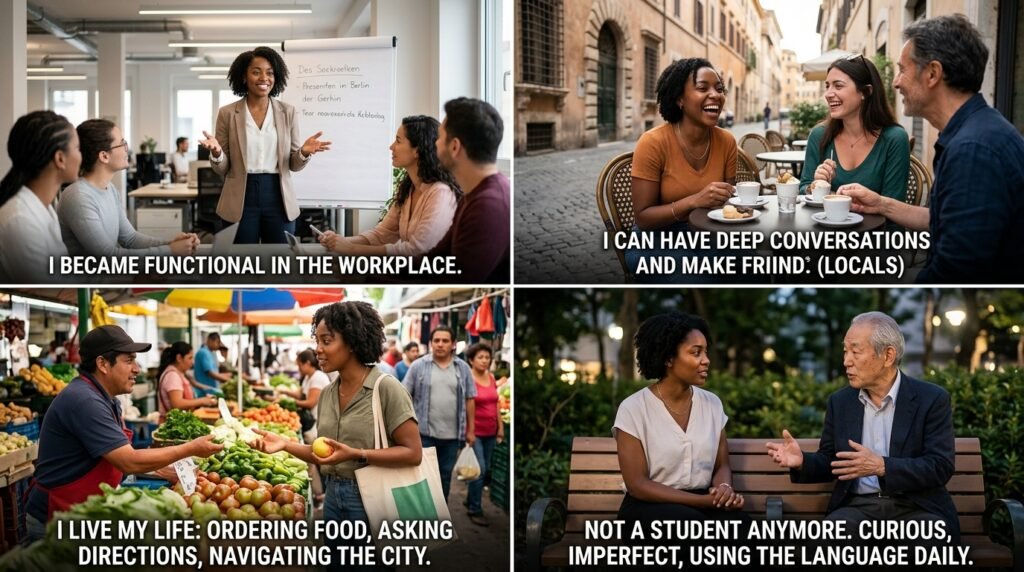
After a year of following this non-traditional path, I achieved something I never did in school. I became functional. I can go to a country that speaks that language and live my life. I can work, make friends, and have deep conversations.
I still make grammar mistakes. I still have an accent. I still have to ask people to repeat themselves sometimes. But I am a speaker of the language. I am no longer a student of it.
The most important thing I learned was that the “method” matters less than the “mindset.” If you approach a language with curiosity and a willingness to be imperfect, you will learn it. You don’t need a classroom. You don’t need a certificate. You just need to show up and use the language every single day.
How to Start Your Own Non-Traditional Journey
If you want to try this, my advice is simple: start with what you love.
-
Find three YouTube channels about your favorite hobby in your target language.
-
Stop using English subtitles and switch to target language subtitles.
-
Find a way to speak out loud every day, even if it’s just to yourself.
-
Throw away your grammar books for the first six months.
You will be surprised at how much your brain can do when you stop trying to control it. We were built to learn languages. It is in our DNA. We just have to get out of our own way.
Stop waiting for a “class” to start. Start your life in the language today. It’s messy, it’s frustrating, and it’s a little bit scary. But it’s also the most rewarding thing I’ve ever done. The world is a much bigger place when you can hear it in more than one voice. Turn off the textbook, turn on a podcast, and just start listening. Your brain will do the rest.
Gabriel Henrique is a language enthusiast and productivity writer. After testing countless study methods, he became obsessed with mastering new languages efficiently. He achieves this without burnout, without endless grammar drills, and without losing focus. At Blog The Curious, he shares everything he has learned along the way.