
I used to stare at my phone until my eyes burned. Swiping left. Swiping right. Flashcard after flashcard. It felt like a punishment. I was trying to learn a language, but I was treating my brain like a dusty filing cabinet. I would sit at my desk, exhausted after a long day, trying to force foreign syllables into my memory. Ten minutes in, I was bored out of my mind.
Boredom is a biological signal. It is your brain telling you that the information in front of you is not vital for survival. When you look at an isolated word on a screen, your mind sees no context. It sees no emotion. It sees no danger or joy. It just sees raw, abstract data. And the human brain is ruthlessly efficient at deleting useless data.
I realized that my review sessions were fundamentally flawed. I was testing myself, not teaching myself. I was asking my brain to recall a word without giving it any hooks to grab onto. I would remember the word “kitchen” for the test. But the next morning, standing in my actual kitchen making breakfast, my mind would go completely blank. The bridge from the digital flashcard to the physical world was broken.
I decided to stop fighting my own biology. If my brain hated boring lists, I would stop giving it boring lists. I threw out my rigid schedules. I deleted the generic flashcard apps. I needed a review system that felt like play. I needed a system that integrated seamlessly into my actual life. I needed the words to live and breathe.
Here is exactly how I completely overhauled my review process to destroy boredom and make the vocabulary permanent.
1. The Real-World Scavenger Hunt
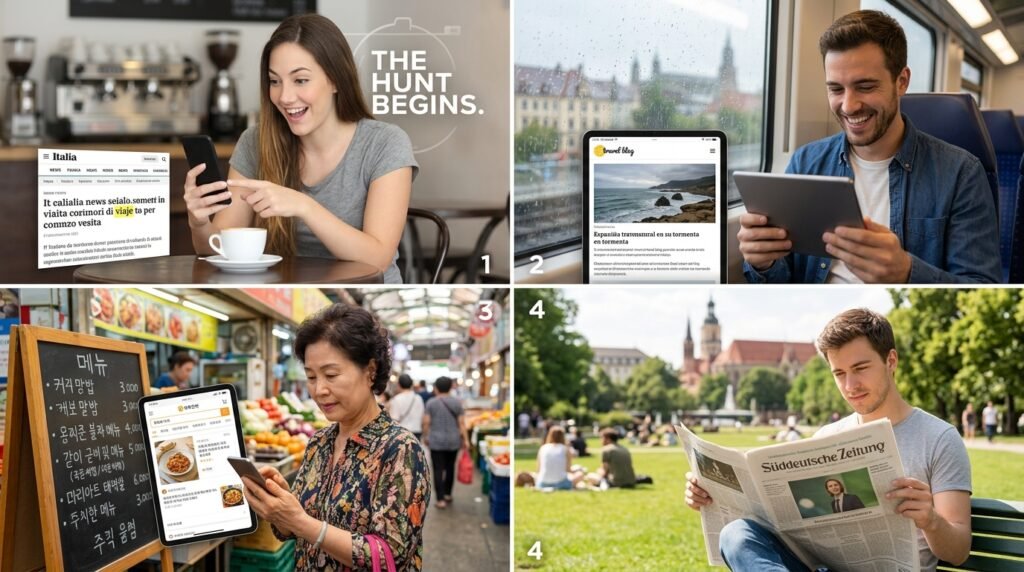
Instead of reviewing words on a blank screen, I started hunting for them in the wild. If my vocabulary list for the week included words about weather, travel, or food, I did not review them by covering up the English translation. I reviewed them by reading real, native content.
I would open a news website, a travel blog, or a recipe site in my target language. My goal was simple: spot my target words in a real article. This completely changed the dynamic. I was no longer memorizing. I was investigating.
When you see a word you just learned used by a native speaker in a real sentence, you get a massive hit of dopamine. It validates your effort. It proves the word is real and useful. This method of contextual hunting was a massive turning point. It is the exact foundation of How I Turned Everyday Moments Into Vocabulary Practice because I stopped consuming language as a student and started consuming it as a native speaker would.
2. The Terrible Storyteller Technique
Flashcards lack narrative. Human beings are storytelling machines. We remember myths and legends for thousands of years, but we forget a phone number in ten seconds. I started using this evolutionary trait to my advantage.
When I had a list of twenty stubborn words to review, I forced myself to write a short, ridiculous story using every single one of them.
The stories were terrible. They made absolutely no sense. I might have a list containing the words: umbrella, negotiate, spicy, pavement, and whisper.
I would write: “The spicy umbrella negotiated with the pavement in a whisper.”
The absurdity is the point. The weirder the mental image, the more the words stick. You are actively manipulating the vocabulary. You are bending the grammar to fit your imagination. By doing this, you take ownership of the words. They are no longer textbook vocabulary. They are your tools for creating something entirely new.
3. The Ghost Lecture
Speaking is a physical skill. You cannot review pronunciation by reading silently in your head. I started giving lectures to an empty room. I call this the Ghost Lecture.
I would pick a topic I knew intimately. It could be how to cook the perfect steak. It could be the plot of a movie I just watched. I would stand up and explain it out loud in my target language.
The catch? I had to weave my daily review words into the lecture. If my word was “complicate,” I had to find a way to use it while explaining the steak recipe. “Do not complicate the seasoning,” I would say to the empty room.
This forces your brain to retrieve the word under the pressure of live speech. It trains your mouth to form the syllables naturally within a flowing sentence. It exposes your weak spots instantly. If you cannot use the word in a fake lecture, you will never be able to access it during a real conversation.
4. Physical Anchoring
You remember physical sensations far better than abstract concepts. I started anchoring my vocabulary review to physical actions.
If my target word was “heavy,” I would go pick up a heavy book or a dumbbell. I would hold it, feel the strain in my muscles, and say the word out loud. I felt the weight in my body while my ears heard the sound.
If the word was “cold,” I would open the freezer and stick my hand inside. If the word was “bitter,” I would bite into a lemon peel. I was literally hardwiring the vocabulary into my nervous system.
You cannot be bored when you are physically interacting with your environment. Your body keeps your brain awake. This visceral connection is the absolute core of The Way I Practice Words That Actually Stick because it bypasses the logical brain and taps directly into your sensory memory.
5. The Evolved Post-It Note Method
Everyone tells you to put sticky notes on the objects in your house. I tried this. It works for about three days. Then your brain gets used to the visual clutter and the notes just become background noise. You stop seeing them entirely.
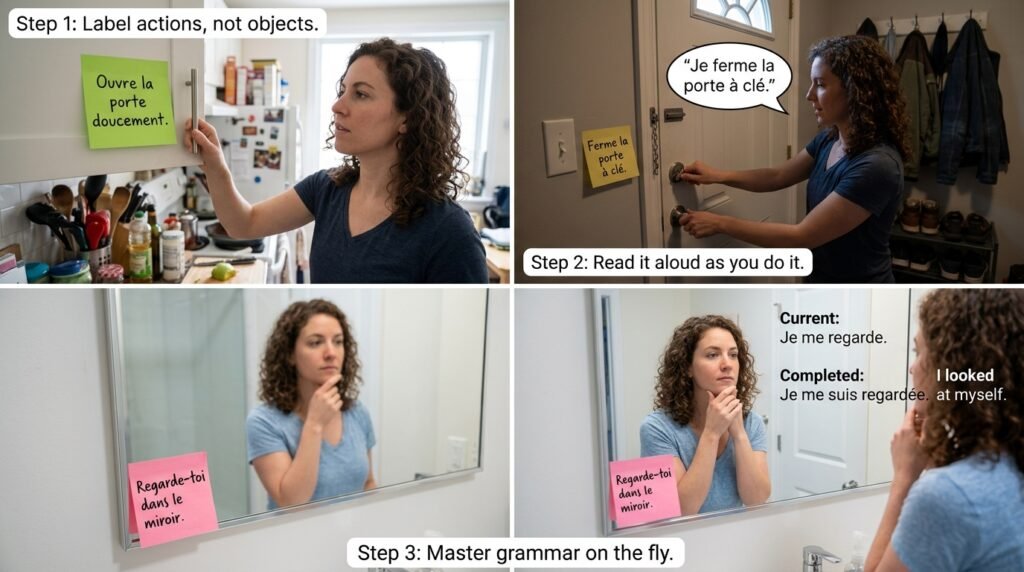
I evolved this method to prevent the boredom factor. I started writing actions instead of nouns.
Instead of writing “door” on the door, I wrote “Open the door quickly.” Instead of writing “mirror,” I wrote “Look at yourself.”
Then, I added a strict rule. I could not perform the action until I read the note out loud and changed the verb tense. If I was opening the door, I had to say, “I am opening the door quickly.” If I had just walked through it, I had to say, “I opened the door quickly.”
This turned my house into an interactive grammar and vocabulary gym. The environment forced me to review, but it required active manipulation. My brain never tuned it out because the task changed slightly every single time.
6. The Shower Argument
Everyone has fake arguments in the shower. You think of the perfect comeback to a coworker or a friend hours after the conversation ends. I started doing this deliberately in my target language.
The shower is a distraction-free zone. It is the perfect place for intense mental review. I would pick a controversial topic or a recent frustrating event. I would build my argument. I would aggressively defend my position out loud. And I would force myself to use the exact vocabulary words I was trying to review that week.
Arguing requires passion. It requires speed. It requires you to access words quickly to make your point. When you review vocabulary while you are mildly annoyed in an imaginary debate, the words lock into your long-term memory. It is impossible to be bored when you are defending your honor, even if the opponent is completely invisible.
7. The Interrogation Technique
When I read a text or watched a video to review my vocabulary, I stopped being a passive observer. I became an interrogator.
If I saw a target word in a sentence, I would pause and ask questions about it in the target language.
-
Who is doing this action?
-
Why did they choose this word instead of a synonym?
-
What happens next?
-
How would I say this negatively?
This forces a deep engagement with the material. You are not just skimming a page waiting to recognize a shape. You are analyzing the context. This constant questioning keeps the mind sharp. It prevents the passive scrolling that inevitably leads to boredom.
You are actively wrestling with the language. This method of constant, varied engagement is exactly How I Use Repetition Without It Feeling Repetitive because every question you ask approaches the vocabulary word from a completely new angle.
8. Gamifying the mundane
Chores are boring. Reviewing vocabulary is boring. I decided to combine them to cancel out the boredom.
I turned folding laundry into a time trial. I would set a timer for five minutes. During those five minutes, I had to fold as many shirts as possible. But for every shirt I folded, I had to construct a verbally perfect sentence using one of my review words.
If I stumbled on the grammar or forgot the word, I had to unfold the shirt and start over.
Adding a ticking clock and a physical penalty completely changes the dynamic of study. It introduces a mild, healthy stress. Your heart rate goes up slightly. You focus entirely on the task at hand. The boredom evaporates because you are playing a game against yourself.
9. Audio Replacement Therapy
I spend a lot of time walking or driving. I used to listen to music or podcasts in my native language during this dead time. I reclaimed those hours.
I recorded myself reading my vocabulary words and the absurd sentences I created for them. I did not just read them in a flat, monotone voice. I read them like a dramatic voice actor. I yelled the angry sentences. I whispered the quiet ones. I gave them distinct personalities.
I listened to these recordings while I drove. Hearing your own voice acting out ridiculous scenarios is highly entertaining. It prevents the mind wandering that usually happens when listening to generic audio lessons. You are reviewing your words, but you are also critiquing your own pronunciation and delivery.
10. The 24-Hour Use-It-Or-Lose-It Rule
The ultimate cure for boredom is necessity. If you do not need a word, you will not remember it. I created a strict 24-hour rule for my review lists.
If I was reviewing a word, I had to find a way to use it in a real conversation within 24 hours. Whether it was texting a language exchange partner, speaking to a tutor, or commenting on a foreign language YouTube video, the word had to leave my brain and enter the real world.
This creates a sense of urgency. You are not reviewing the word for a test next week. You are reviewing the word because you need to use it tonight. This immediate application makes the review session feel incredibly relevant and highly practical.
Redefining the Concept of Review
The word “review” itself is part of the problem. It sounds like looking backwards. It sounds like checking a rearview mirror. We need to look forward.
We are not reviewing words. We are deploying them. We are testing our tools in the field. If your tools are sitting in a box, they rust. If you use them to build a house, they stay sharp.
Stop treating your vocabulary like a museum exhibit that you walk past and observe. Treat your vocabulary like a box of tools that you use to dismantle and rebuild your environment.
Taking Ownership of Your Focus
You have to take responsibility for your own boredom. If you are falling asleep while studying, it is not because the language is boring. It is because your method is boring.
You are in total control of how you interact with the material. If flashcards make you miserable, stop using them immediately. There is no law that says you must swipe a screen to become fluent in a language.
Find what makes you feel alive and inject the vocabulary into that space. If you love cooking, bring the words to the stove. If you love fitness, bring the words to the gym. If you love writing, bring the words to your journal.
The Vital Role of Rest
Finally, you must recognize that boredom is sometimes just fatigue disguised as apathy.
Your brain uses a massive amount of calories to process a new language. It is heavy cognitive lifting. If you are staring at your vocabulary list, trying your hardest to focus, and nothing is sticking, you might not be bored. You might just be exhausted.
Do not force it. Forcing a review session when you are mentally depleted builds a negative, resentful association with the language. You will start to hate the process.
Close the book. Turn off the screen. Step away from the desk. Go to sleep. Let your subconscious mind process what you have learned during the day. Rest is a crucial component of memory consolidation. Tomorrow is a new day, and your brain will be ready to work again.

The Final Takeaway
Fluency is a long game. It takes years. You cannot sprint your way there using methods you absolutely hate. Willpower is a finite resource, and if you rely on it to force yourself through boring review sessions, you will eventually quit.
You have to build a system that you actually enjoy returning to day after day. Ditch the rote memorization. Start hunting for words in real articles. Write terrible, absurd stories. Yell your vocabulary in the shower. Anchor the sounds to physical objects in your home.
Make the language a living, breathing part of your daily routine. When you stop studying and start using the language, the boredom disappears permanently. And when the boredom disappears, the words finally stay exactly where they belong.
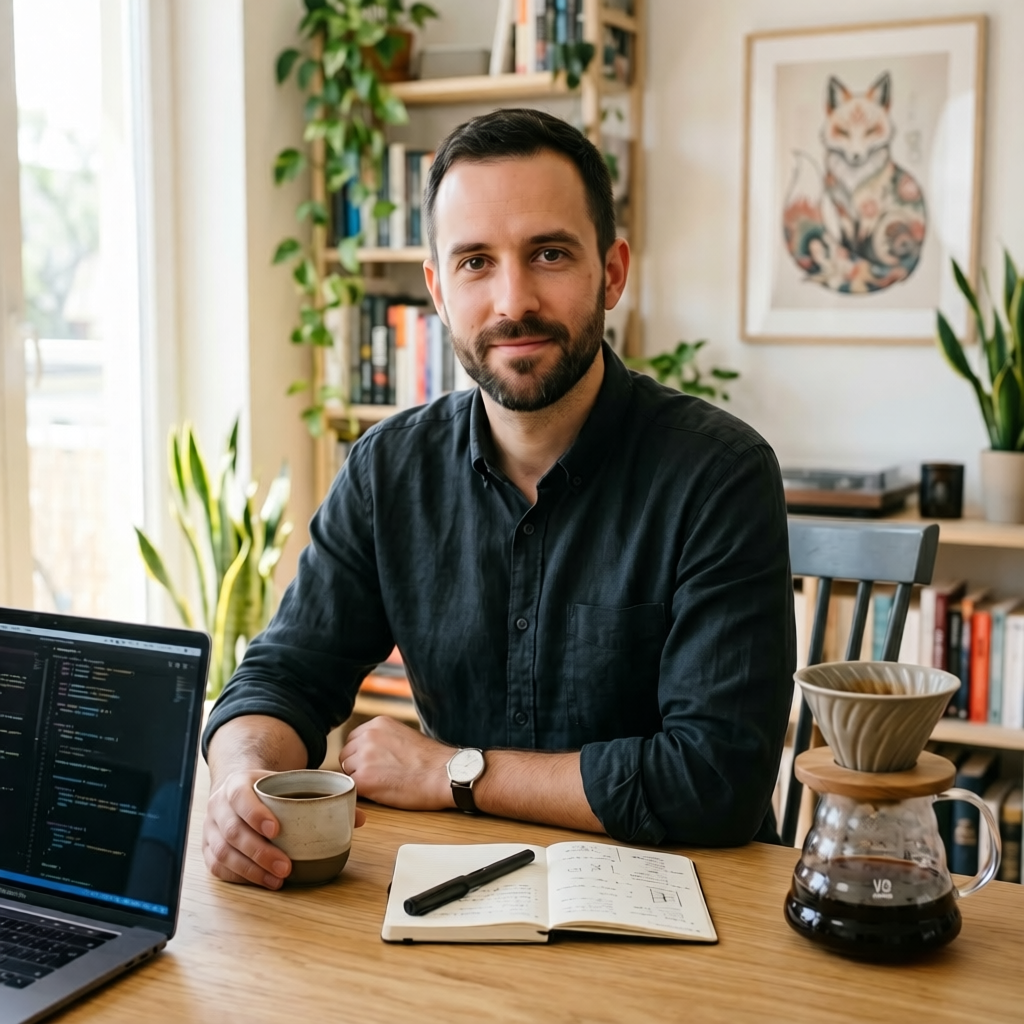
Gabriel Henrique is a language enthusiast and productivity writer. After testing countless study methods, he became obsessed with mastering new languages efficiently. He achieves this without burnout, without endless grammar drills, and without losing focus. At Blog The Curious, he shares everything he has learned along the way.