
I manage a network of specialized digital publishing websites. I spend my days writing technical privacy policies and building internal link maps. I analyze complex NBA player metrics for playoff forecasting. I track first-action statistics like points, rebounds, and assists with obsessive detail. My professional life is built on cold data and rigid systems.
When I decided to learn a foreign language, I applied this same analytical mindset. I thought I could solve the problem of consistency by simply downloading the best apps. I was wrong. My phone was initially a weapon of mass distraction. It sent me notifications about leaderboards and digital gems. It tried to gamify my education. I realized that most language apps are designed to keep you on the app, not to make you fluent in the real world.
I had to stop being a user and start being an architect. I stripped my phone of everything that did not serve my goal. I used task automation and digital minimalism to remove the need for willpower. Here is exactly how I use technology to stay consistent when my mental battery is empty.
The Myth of Digital Willpower
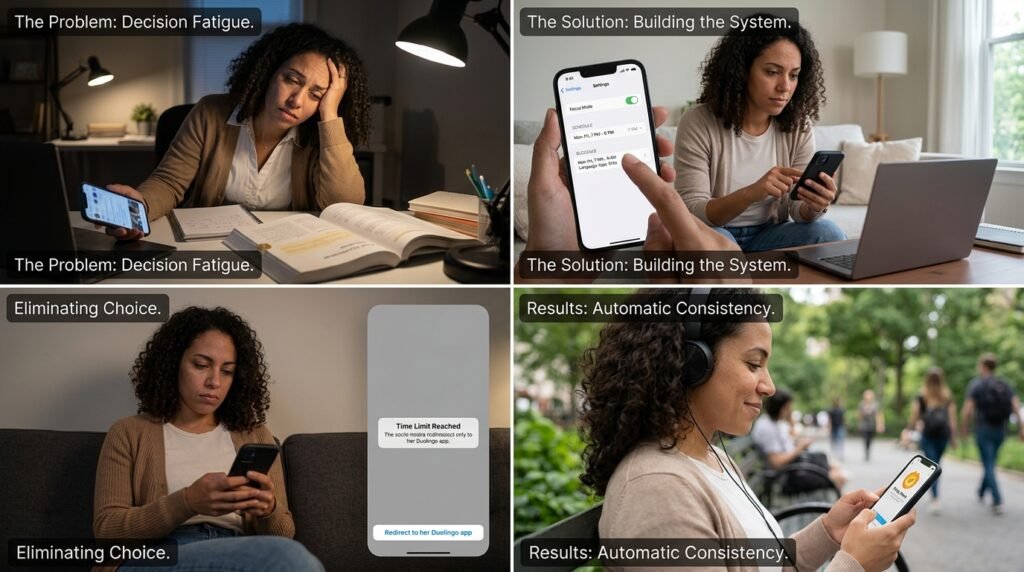
Willpower is a finite resource. I wake up with a full tank. By the time I have finished my professional work, that tank is bone dry. I cannot rely on a “feeling” of motivation at 7:00 PM to open a language app. If I have to choose between a difficult grammar exercise and a social media feed, the social media feed wins every time.
I decided to eliminate choice entirely. I used technology to force the language into my environment. I stopped asking my brain for permission. I built a digital cage that only allowed me to move in one direction. Consistency is not about being a strong person. It is about building a system that makes failure difficult.
The Automated Trigger
I rely heavily on mobile software and task automation. I used the native shortcuts application on my smartphone to create a rigid digital trigger. I tied this trigger to a physical ritual that I never skip.
I am meticulous about my morning coffee. I brew Ethiopian Guji beans every single morning. I use a strict V60 pour over method. I weigh exactly 18 grams of coffee on a digital scale. The bloom phase takes exactly 45 seconds. The total draw down takes about three minutes.
I programmed my phone to recognize the exact time this ritual happens. At exactly 7:00 AM, my phone automatically enters a strict Focus Mode. It silences all incoming emails. It blocks my browser. It mutes every single notification. Then, it automatically launches my primary vocabulary tool.
The Tool That Made My Study Routine Easier was this specific automation script. I do not have to “choose” to study. The phone literally presents the vocabulary cards while the water drains through the paper filter. The physical smell of the coffee and the heat of the kettle act as a neurological anchor. My brain knows that coffee time is study time.
The Power of Grayscale
Color is a psychological trigger. App developers use bright red notification badges and neon icons to trigger dopamine spikes in your brain. Your phone is designed to function exactly like a casino slot machine.
I went into my accessibility settings and turned off all color processing. I switched my entire phone to grayscale.
The impact was immediate. The social media icons looked dead. The news feeds lost their visual appeal. The phone became a boring, utilitarian tool. When the screen is grey, you only look at it when you have a specific job to do. This simple trick destroyed my urge to scroll. It cleared the digital noise and allowed me to focus on the language data.
Sourcing Personal Data
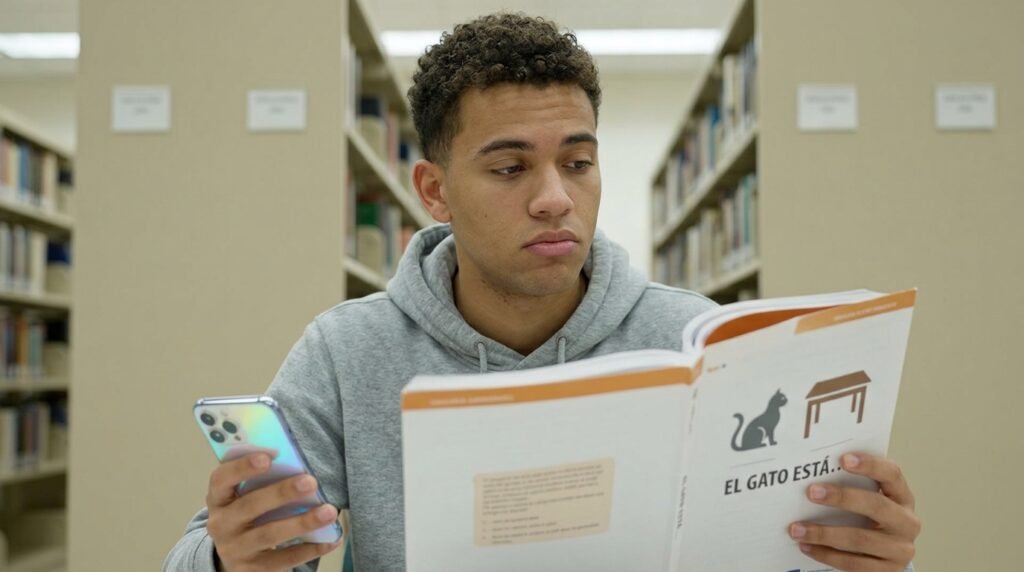
Most language apps fail because the content is irrelevant. They teach you how to say the cat is under the table. I do not go to libraries. I do not care about cats. My brain is optimized to delete information it deems useless.
I turned my phone into a personalized data collector. I manage niche blogs. I study digital photography. I focus on high-precision identity likeness and the aesthetics of 35mm film. I use a Canon IXUS for that specific retro flash look.
I started feeding this specific data into my learning system. I added terms about glass geometry and shutter speeds. I translated my own NBA playoff forecasts into my target language. I added cards about rebound probabilities and assist ratios.
How I Built a Learning System That Didn’t Feel Like Studying happened when the content became personal. I am not a student memorizing a textbook. I am a professional using a foreign language to describe my actual life. When the data is relevant to your career and your hobbies, consistency becomes a natural byproduct.
Hijacking the Audio Feed
I spend at least forty minutes a day driving. I used to listen to English podcasts or sports radio. I realized this was a massive waste of high-quality listening time.
I used mobile automation to hijack my car’s audio feed. I built a background script that triggers the moment my phone connects to my car’s Bluetooth.
The script silences my music and automatically launches a native-language sports broadcast. It hits the play button without me touching the screen. I do not have to search for the file. The target language simply fills the car the moment I turn the key.
I stopped listening to “language lessons.” I started listening to unscripted, messy, native content about basketball and technology. Even if I only understand sixty percent, my ears are constantly being trained to handle the real speed of human speech.
The App Features That Matter
I deleted ninety percent of the language tools on my phone. Most of them are filled with “digital busywork.” They make you match colorful tiles or dress up digital characters. This gives you a false sense of progress. You are getting good at the game, not the language.
I now only look for tools that offer raw, data-driven features. I need a Spaced Repetition System (SRS). I need a tool that tracks my forgetting curve and shows me cards at the exact mathematical interval.
The App Features That Actually Made a Difference were things like cloze deletion and custom image uploads. I take photos of my actual world. I take a photo of my 35mm lens. I take a photo of my V60 dripper. I use these as the visual prompts on my digital cards. This creates an unbreakable link between the foreign word and my physical reality. I am not translating. I am thinking.
The Two-Minute Contract
I manage a heavy professional workload. Some days the server crashes. Some days the analytics data is overwhelming. On those days, a twenty-minute study session feels like an impossible mountain.
I made a contract with myself. The minimum requirement is two minutes.
I use my phone to facilitate this. I have a dedicated widget on my home screen that shows me my daily vocabulary count. If I feel exhausted, I open the app and do five cards. That takes less than two minutes.
Consistency is about the frequency of contact, not the duration. If you touch the language every single day, the neural pathways remain active. The two-minute contract kills the “all or nothing” mentality that leads to burnout.
The Digital Writing Routine
I stopped using my phone just to consume. I started using it to produce. Every evening, I open a blank digital notepad. I force myself to write three original sentences about my day.
I write about the NBA playoff spreads I analyzed. I write about a new site icon I designed. I force my thumbs to type out the complex foreign characters.
This builds physical muscle memory. Typing in a foreign language requires a different rhythm than typing in English. By using a simple notepad app every night, I am training my brain to produce the language from scratch without the help of multiple-choice hints.
Managing the Digital Environment
I treat my home screen like a piece of high-value real estate. I only allow four icons on the dock. These are the tools I use for my professional business and my language studies.
I moved all distracting apps into a single folder on the third page of my phone. This adds friction. If I want to waste time, I have to work for it. I have to swipe twice and open a folder.
This friction is usually enough to stop the impulsive urge to scroll. I turned my phone from a distraction machine into a dedicated workstation. When I unlock my device, the first thing I see is my target language. The environment dictates my behavior.
The Weekly Audit
I am an analyst. I do not trust my own memory of how much I studied. I trust the data.
Every Sunday, I check my Screen Time report. I look at the raw numbers. I look at the minutes spent in the vocabulary app vs. the minutes spent in the web browser.
If the numbers are low, I do not get emotional. I do not blame my lack of discipline. I look at the system. I ask myself why the automation failed. I check the triggers. I adjust the scripts. This objective approach removes the guilt and replaces it with problem-solving.

Redefining Success
Technology can give you the tools, but it cannot give you the courage. I use my phone to stay consistent with the data, but I know the data is only half of the battle.
The ultimate goal is to put the phone down.
I use the consistency built through apps and automation to prepare for real-world interactions. I use the vocabulary I learned during my coffee ritual to order a drink in a foreign city. I use the basketball terms I memorized to have a conversation about the NBA playoffs with a native speaker.
The technology is the training ground. The real world is the game.
Stop looking for the “perfect” app that will do the work for you. It does not exist. Use technology to build a cage for your attention. Silence the noise. Automate the friction. Feed the system your actual passions. Consistency is simply the result of a well-designed environment. Start the purge of your phone today. Turn it into a tool, and the progress will follow.

Gabriel Henrique is a language enthusiast and productivity writer. After testing countless study methods, he became obsessed with mastering new languages efficiently. He achieves this without burnout, without endless grammar drills, and without losing focus. At Blog The Curious, he shares everything he has learned along the way.