
I used to spend six hours a day staring at my smartphone. I checked the screen time report and felt entirely sick. I told myself I was studying a foreign language. I was actually just clicking colorful buttons and collecting digital rewards. My phone was a massive, highly optimized slot machine. I was losing the game completely.
I manage a complex network of digital publishing websites. I write strict privacy policies and build intricate internal link architectures. My professional life is built on cold data and rigid systems. I realized I needed to apply that exact same systemic approach to my smartphone. I had to rip my digital habits apart. I had to build a machine that forced me to learn. Here is the exact digital routine I use to drive real fluency into my brain.
The Automated Morning Trigger
Willpower is a highly unreliable tool. You wake up with a full tank of mental energy. By the end of a busy workday, that tank is completely empty. If you rely on willpower to study, you will fail.
I removed willpower from the equation completely. I used the native task automation software on my smartphone to build a rigid digital trigger. I tied this script directly to a physical ritual that I execute every single morning without fail.
I am incredibly meticulous about my morning coffee. I brew Ethiopian Guji beans. I weigh exactly eighteen grams of coffee on a digital scale. I use a strict V60 pour over method. I monitor the exact water temperature with a gooseneck kettle. The bloom phase takes exactly forty five seconds.
I programmed my phone to recognize this exact physical window. At exactly seven o’clock every morning, my phone enters a strict focus mode. It completely silences all incoming emails. It blocks my web browser. It automatically launches my primary spaced repetition flashcard application.
I do not make a conscious decision to study. The software makes the decision for me. The phone presents the vocabulary cards while the hot water drains through the paper filter. The physical smell of the coffee acts as a permanent neurological anchor. I realized The Routine That Helped Me Go From Zero to Basic Conversations was built entirely on this specific automated trigger.

Stripping the Digital Interface
Most language applications are designed to entertain you. They use bright red notification badges and neon icons to trigger dopamine spikes.
I executed a ruthless digital purge. I deleted every single gamified application on my device. I deleted the animated mascots. I deleted the leaderboards. I kept one single, highly utilitarian database tool.
It looks exactly like an ugly digital spreadsheet. It has absolutely zero sound effects. It simply tracks my memory retention curve and shows me a word the exact second before I forget it.
I took the customization one step further. I opened the accessibility settings on my phone and turned on the grayscale color filter. The entire screen instantly turned into a boring, flat grey box. This completely destroys the addictive visual power of the device. You only look at a grey screen when you actually need to accomplish a specific task.
Sourcing Wild Personal Data
A digital routine only works if the data is highly relevant to your actual life. Default application curriculums teach you how to ask for directions to a public library. They teach you the names of farm animals.
My brain actively deletes information it deems useless. I do not care about farm animals.
I turned my phone into a personalized data collection tool. I track professional basketball statistics. I analyze first action NBA playoff metrics. I calculate point spreads, rebounding probabilities, and assist ratios. I took these highly specific statistical terms and built my own custom flashcards.
I also study digital photography. I focus on preserving precise facial geometry in my edits. I analyze the retro visual aesthetics of 35mm film lenses and vintage Canon IXUS flashes. I translated these technical concepts into my target language and fed them directly into my database. When the vocabulary describes your actual passions, your brain locks onto the data immediately.
The Visual Anchoring Method
I completely banned the use of the English language on my digital screen. Translating a foreign word into English text creates a massive mental bottleneck. It trains your brain to take the slow path.
I used my smartphone camera to build direct links to reality. When I want to learn the foreign word for a camera shutter, I do not type the English translation. I take a high resolution macro photograph of my physical camera equipment. I upload that specific photo directly to the digital flashcard.
When the software tests me, I look strictly at the glass geometry and the metal casing in the photograph. My brain maps the foreign sound directly to the physical object. This simple visual tool completely eliminates internal translation. It forces you to think directly in the target language.
Hijacking the Audio Feed
I spend a large amount of time driving to different coffee shops to write my digital publishing content. I used to listen to English podcasts during these drives. I realized this was a massive waste of high quality listening time.
I used my mobile automation software to completely hijack my own audio feed.
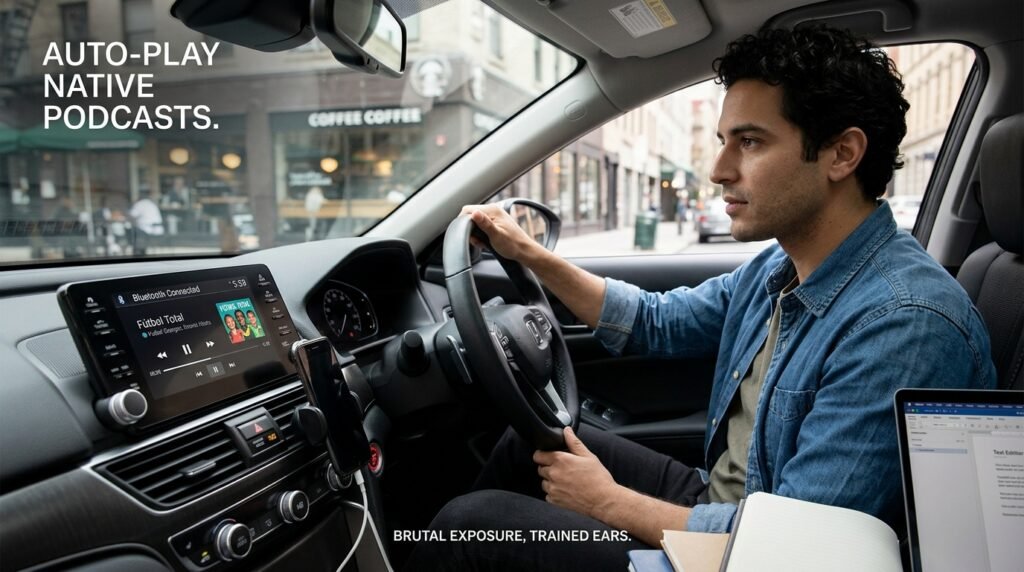
I built a specific background script. When my phone connects to the Bluetooth system in my car, it automatically launches a native language sports podcast. It hits the play button instantly. I do not have to touch the screen. The target language simply fills the car the exact moment I turn the key in the ignition.
I do not listen to slow, artificial audio recorded by robotic voice actors. I listen to unscripted, messy, native content. The hosts speak incredibly fast. They slur their words together. It is terrifying at first. But this brutal exposure is the only way to train your ears to handle the actual velocity of human speech.
Reclaiming the Dead Time
A busy professional life is completely full of hidden, wasted minutes. I call this dead time. You wait in line at the grocery store for five minutes. You wait for a website server to compile for three minutes.
The average person pulls out their phone and scrolls through a social media feed. I completely reclaimed my dead time.
I organized my home screen perfectly. My raw flashcard application is always exactly one tap away. When I have two free minutes, I complete ten rapid vocabulary reviews. I string dozens of these tiny micro sessions together throughout the entire day. I figured out How I Turned Small Daily Practice Into Real Progress by aggressively hunting for these hidden pockets of time. By the time I go to sleep, I have completed a full hour of intense study without ever sitting down at a desk. You do not need massive blocks of free time. You just need to weaponize your transitional moments.
Forcing the Output
Digital tools naturally train you to be a passive consumer. You consume multiple choice questions. You read flashcards. You listen to podcasts.
Fluency requires you to be a rapid creator. You have to generate spontaneous thoughts. You have to pull the language out of absolute nothingness.
I integrated a strict writing protocol into my evening routine. I open a completely blank digital notepad on my device. I force myself to write a five sentence journal entry entirely in my target language.
I write about the specific server migrations I handled that afternoon. I write about the privacy policies I drafted for my domains. I force my thumbs to type out the complex foreign characters. This builds massive physical muscle memory. It exposes your grammatical weaknesses immediately. You cannot hide behind a multiple choice menu when you are staring at a blank page.
The Audio Shadowing Drill
Listening is only half of the audio equation. You must train the physical muscles in your jaw and tongue.
I use a dedicated audio player application that features a granular speed control slider. I find a two minute clip of a native speaker discussing website analytics. I pull the speed slider down to exactly seventy five percent.
I play the audio and I shadow the host. I speak aloud at the exact same time. I try to perfectly overlap my voice with their voice. I try to match their exact pitch and rhythm.
I repeat this brutal process ten times in a row. It is physically exhausting. My mouth physically aches. But this specific digital drill completely shocks your nervous system. Once your jaw maps the sentence perfectly at the slow speed, you push the slider back up to one hundred percent. The fast speed suddenly feels completely manageable.
The Monolingual Dictionary Shift
Translation applications are dangerous crutches. You highlight a difficult foreign sentence, tap a button, and read the perfect English translation instantly. Your brain learns absolutely nothing from this interaction. It outsources the heavy lifting entirely to the algorithm.
I deleted every single translation tool from my smartphone. I replaced them with a strict monolingual dictionary.
When I find a foreign word I do not understand, I am forced to read the definition in that exact same foreign language. I have to use simpler foreign words to decode the complex foreign word.
This process is agonizing at first. A simple reading session takes five times longer. But it forces your brain to stay completely submerged inside the target language environment. It prevents the lazy habit of falling back on your mother tongue.
The Weekly Data Audit
I do not trust my own feelings. Feelings fluctuate daily. I trust raw data.
I treat my personal language progress exactly like I treat the traffic analytics for my digital publishing websites. Every Sunday night, I execute a strict review protocol. I open the native screen time features on my smartphone.
I look at the raw numbers. I look at exactly how many minutes I spent actively swiping inside my flashcard application. I check my retention rates. If I fail a specific word ten times in a row, the software flags it as a leech. I delete the leech immediately. It is a bad data point. I rebuild the concept with a better photograph and a better sentence.
You absolutely cannot improve what you do not measure. The objective numbers remove the guilt and replace it with clinical problem solving.
The Nightly Reset Protocol
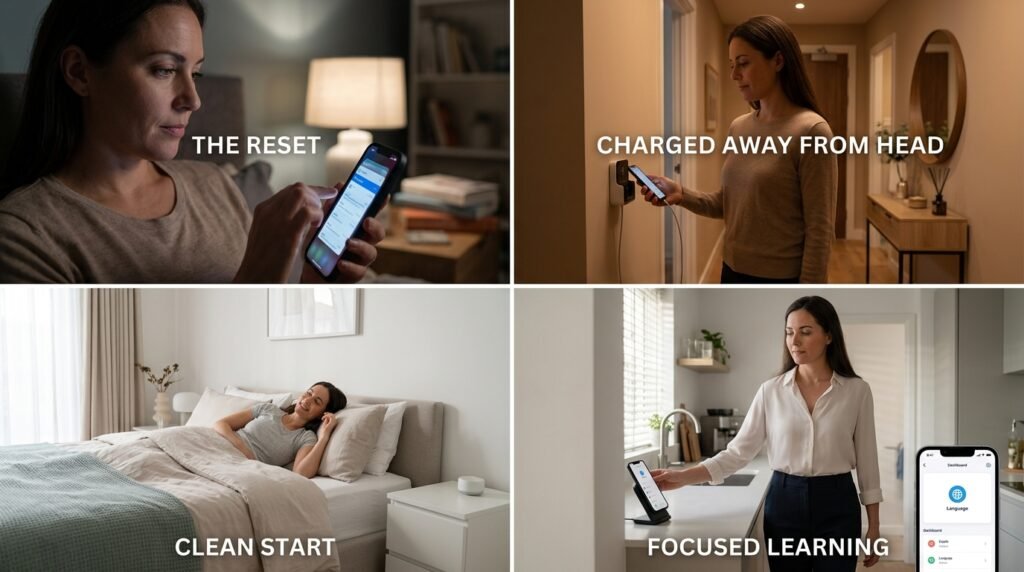
Your morning success is completely determined by your physical actions the night before. If you leave your phone cluttered with open browser tabs and twenty unread emails, you will wake up to immediate digital stress. The routine will fail before you even get out of bed.
I built a strict nightly reset protocol. Before I go to sleep, I manually close every single open application on my device. I clear the entire digital cache.
I plug the phone into a charger located completely outside of my bedroom. I never sleep with the phone next to my head. This physical separation guarantees my morning remains clean. I discovered exactly How I Made Learning a Language Part of My Daily Life by controlling the physical location of my digital tools.
When I pick the phone up at seven o’clock the next morning, it is a clean, highly focused learning machine. It is fully primed and ready to execute the morning automation sequence flawlessly.
The Ultimate Realization
Your smartphone is an incredibly powerful piece of technology. It holds the absolute sum of all human knowledge. But the default settings are designed to turn you into a passive, addicted consumer.
You must rebel against the default settings. You must become the absolute master of your digital environment.
Turn off the colors. Delete the gamified toys. Automate the friction. Harvest your own raw data. Anchor the software to your daily physical rituals. Use your camera to capture physical reality. Force yourself to produce original thoughts on a blank screen.
When you stop trying to entertain yourself and start treating your language study like serious heavy machinery, your progress will absolutely explode. The tools demand your full attention. Engineer your routine today and build the real world fluency you actually deserve.

Gabriel Henrique is a language enthusiast and productivity writer. After testing countless study methods, he became obsessed with mastering new languages efficiently. He achieves this without burnout, without endless grammar drills, and without losing focus. At Blog The Curious, he shares everything he has learned along the way.