
I remember staring at my computer screen on a Friday night. I was looking at a language exchange website. A native speaker was online and ready to chat. I hovered my mouse directly over the call button. My heart started beating rapidly. My palms started sweating. I closed the laptop completely. I walked into the kitchen and brewed an AeroPress coffee instead.
I was absolutely terrified. I knew thousands of vocabulary words. I understood complex grammar rules. I could read articles easily. But the thought of actually opening my mouth and speaking out loud completely paralyzed me.
This specific fear is incredibly common. You spend months building a massive database of knowledge in your head. You want to sound intelligent. You know that the moment you speak, you will sound like an absolute beginner. Your ego cannot handle that brutal drop in status.
I lived with this fear for a very long time. I missed countless opportunities to connect with real people. I realized my silent study routine was a comfortable trap. I had to break out of it. I had to build real vocal confidence.
Confidence is not a magical personality trait. It is a physical habit. You build it through deliberate, daily action. Here is exactly how I built my speaking confidence from the ground up.
Recognizing the Mental Block
I analyzed my fear deeply. The fear did not come from the language itself. The fear came entirely from my own ego.
I am a professional adult. I build niche websites. I manage digital monetization strategies. I am used to feeling highly competent in my daily life. Speaking a brand new language stripped all of that competence away instantly. It made me feel incredibly vulnerable. It made me feel like a child.
You have to accept this vulnerability. You must give yourself permission to sound foolish. You cannot skip the beginner phase. Every single fluent speaker you admire went through a phase where they sounded terrible. They just refused to let the embarrassment stop them. I had to actively kill my need to look smart.

The Failure of Silent Study
Reading and writing do not prepare your vocal cords for action. Reading is entirely passive. Writing gives you the luxury of time. You can stop, erase, and edit your thoughts.
Spoken conversation offers zero luxury of time. It demands instant physical reflexes.
I realized I was studying for a written exam, not a spoken conversation. I completely changed my daily routine. I stopped reading books silently. I started reading everything out loud. I forced my mouth to physically produce the foreign sounds. Your jaw and tongue need physical exercise to build muscle memory. Silent study is a complete waste of time if your actual goal is fluency.
Speaking to the Empty Room
You do not need a native speaker to start practicing. The pressure of another human being is too high for a beginner. You need a completely safe environment to fail.
I turned my empty living room into a private language laboratory. I paced back and forth and talked to the walls.
I narrated my daily chores. When I washed the dishes, I described the exact temperature of the water. I named the plates and the forks. When I cooked dinner, I named the ingredients. I forced my brain to pull vocabulary words into the physical world. This zero pressure environment allowed me to stumble and stutter safely. I built basic vocal momentum without any social risk.
Recording the Ugly Truth
You always think you sound better than you actually do. The bones in your skull distort your voice. You need objective data to improve.
I started using the voice recorder app on my phone. I recorded myself speaking for two minutes every single day. I forced myself to listen to the playback immediately.
The first few recordings were physically painful to hear. I cringed at my own hesitation. I heard every single mispronounced vowel. But those recordings gave me a highly accurate map of my weaknesses. I stopped guessing where I was failing. I knew exactly what to fix the next morning. I mapped out this exact painful process in How I Got Comfortable Hearing My Own Voice because it is a mandatory step for real growth.
Scripting the First Thirty Seconds
The most terrifying part of any conversation is the very beginning. The initial panic is overwhelming.
I completely neutralized this panic by heavily scripting my introductions. I wrote down exactly what I was going to say for the first thirty seconds of a conversation. I wrote down my name, my background, and why I was learning the language.
I practiced this specific script hundreds of times alone. I memorized it perfectly.
When I finally met a native speaker, I deployed the script automatically. I did not have to think. My mouth simply took over. This perfect execution completely killed my initial anxiety. By the time the thirty seconds were over, my heart rate was normal. I was calm enough to handle the unscripted rest of the conversation.
Gamifying the Daily Output
I love tracking data. I run complex statistical models for NBA playoff matchups. I look for specific player prop betting trends. I track assists, rebounds, and first basket probabilities.
I decided to apply this exact analytical mindset to my language output. I gamified my daily speaking habits.
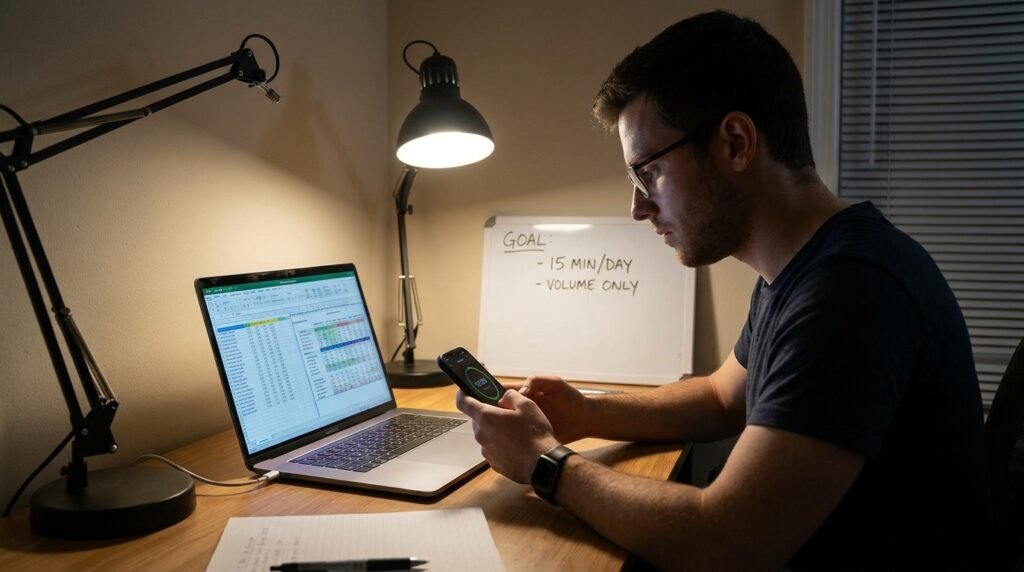
I stopped judging the quality of my grammar. I only tracked the volume of my output. I created a daily spreadsheet. My only goal was to speak out loud for fifteen solid minutes every single day. If I hit fifteen minutes, I won the day. It did not matter if I made a hundred mistakes. Volume and consistency were the only metrics that mattered. This removed the heavy pressure of perfection.
Stepping into the Real World
You cannot stay in your private laboratory forever. Eventually, you have to face real human beings.
I did not start with a massive, high stakes conversation. I started with incredibly small interactions. I went to places where the script was highly predictable.
I went to a local bakery. I knew exactly what the baker was going to say. He was going to ask for my order. He was going to tell me the price. I prepared my exact response beforehand. I walked in, delivered my sentence, paid, and left.
The interaction lasted fifteen seconds. But it provided a massive spike of real confidence. The native speaker understood me. The transaction was successful. I used these micro interactions to slowly build my courage. I detail this exact progression in What I Did When I Was Afraid to Speak to help you safely transition into the real world.
The V60 Coffee Shop Test
I needed a slightly bigger challenge. I maintain a deep interest in specialty coffee. I know exactly how a proper V60 pour over should taste. I know the specific vocabulary regarding extraction and flavor notes.
I found a local specialty cafe run entirely by native speakers. I made this cafe my ultimate testing ground.
I walked in and ordered a V60 pour over. I did not just point at the menu. I asked the barista about the specific origin of the beans. I asked about the roast profile.
I used the specialized vocabulary I already knew deeply in my native language. Because I was highly passionate about the topic, the foreign words flowed much easier. Passion completely overrides anxiety. When you talk about something you genuinely love, you forget to be nervous.
Embracing the Awkward Pause
Conversations are never perfectly smooth. You will inevitably forget a word. You will lose your train of thought.
Beginners completely panic during these moments of silence. They freeze. They stare at the floor. They frantically try to translate an English word in their head. The silence becomes agonizing.
I had to actively train myself to embrace the awkward pause.
I learned the native filler words. I learned the specific cultural sounds for hesitation. When I forgot a word, I stopped panicking. I simply made the native hesitation sound. I bought myself three seconds of quiet time to retrieve the correct vocabulary. I stopped apologizing for the delay. I realized native speakers pause and hesitate all the time. It is a completely natural part of human speech.
Lowering the Conversational Stakes
You view every conversation as a massive test of your worth. You think the native speaker is judging your intelligence.
They are not. They truly do not care about your verb conjugations. They just want to know what you are trying to say.
I actively lowered the stakes in my own mind. I stopped trying to prove how smart I was. I stopped trying to use complex, poetic sentence structures. I stuck to simple, direct facts.
I focused entirely on the pure transfer of meaning. If I used the wrong gender for a noun, but the barista still handed me the correct coffee, the conversation was a total success. I celebrated the successful transfer of meaning and completely ignored the minor grammatical errors.
Focusing on the Other Person
Anxiety is highly self centered. When you are nervous, you are entirely focused on yourself. You focus on your own breathing. You focus on your own mistakes. You focus on your own fear.
I cured my anxiety by completely shifting my focus outward.
During a conversation, I stopped thinking about my next sentence. I focused entirely on the native speaker. I looked closely at their facial expressions. I listened deeply to their tone of voice. I focused on making them feel completely heard and understood.
When you put all your mental energy into listening to the other person, you have zero energy left to fuel your own panic. Curiosity is the absolute best antidote to fear. Ask them questions. Let them do the heavy lifting of the conversation.
Tracking the Right Metrics
You must build a strong system to track your daily habits. Motivation will eventually fade. You need structural discipline to keep pushing your vocal cords.
I used a mobile productivity app specifically designed for habit tracking. I logged my daily speaking minutes just like I logged my daily exercise.
I completely ignored the subjective feelings of success or failure. I only looked at the objective data. Did I complete my daily vocal drills? Yes or no. Did I initiate one real world conversation today? Yes or no. I created a strict visual chain of successful days. I mapped out this exact system in How I Built Confidence Speaking Step by Step so you can automate your own daily discipline.
The visual proof of your consistency is highly motivating. When you see thirty consecutive days of active speaking practice on your tracker, your confidence naturally hardens into concrete.

Repetition Kills Fear
Confidence is not something you are born with. It is something you earn through aggressive, relentless repetition.
The first time you speak a foreign language, you will feel terrified. The tenth time, you will feel slightly nervous. The hundredth time, you will feel completely bored.
Boredom is the ultimate goal. You want the act of speaking to become so incredibly routine that it no longer triggers an emotional response.
You achieve this boredom through massive volume. You must put in the necessary reps. You must talk to your empty kitchen. You must record your terrible voice notes. You must walk into the local bakery and stumble through a transaction.
Stop waiting for a magic feeling of readiness. You will never feel fully ready. The confidence only arrives after you take the action. Open your mouth today. Accept the awkwardness. Push through the immediate panic. The more words you force out into the world, the faster your fear will permanently disappear.
Gabriel Henrique is a language enthusiast and productivity writer. After testing countless study methods, he became obsessed with mastering new languages efficiently. He achieves this without burnout, without endless grammar drills, and without losing focus. At Blog The Curious, he shares everything he has learned along the way.